
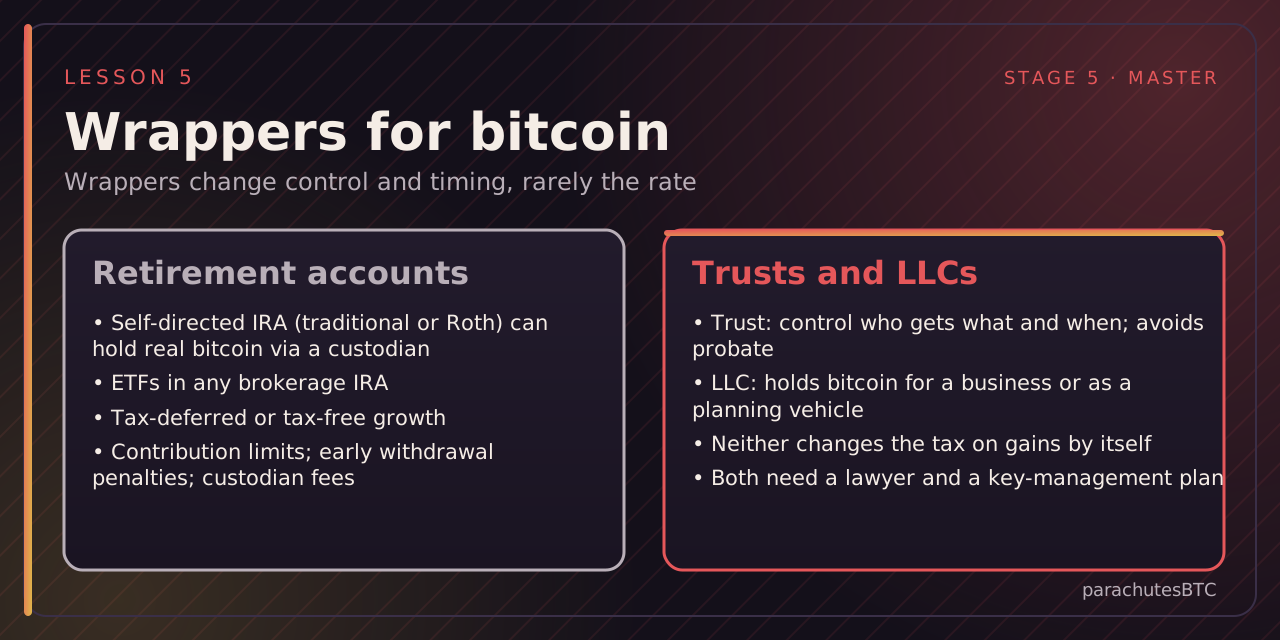
Retirement accounts
- Any brokerage IRA can hold spot bitcoin ETFs. Simple, with the ETF's trade-offs.
- A self-directed IRA (SDIRA) can hold actual bitcoin through an IRS-approved custodian, often structured with an LLC the IRA owns (a "checkbook IRA"). Traditional: pre-tax contributions, taxed on withdrawal, required distributions in your 70s. Roth: after-tax contributions, tax-free qualified growth and withdrawals, no required distributions. Contribution limits are a few thousand dollars a year (more over 50). Setup and custody fees can be significant, and the IRS prohibits personal use of IRA assets, which includes holding the keys yourself in ways that break the rules.
- 401(k)s rarely offer bitcoin; some plans now include an ETF option.
The appeal is obvious for a volatile asset expected to appreciate: gains inside a Roth are never taxed. The constraints are real: limits, penalties before 59½, custodian dependence.
Trusts
A revocable living trust holds assets during your life and passes them on your death without probate, under rules you set (ages, conditions, trustees). It does not reduce income or capital gains tax. For bitcoin, the hard part is custody: the trustee must be able to access the keys when needed and not before. Collaborative multisig with the trustee holding a key, and a letter of instruction, is a common design. Irrevocable trusts can reduce estate tax for large estates, at the cost of control.
LLCs
An LLC can hold bitcoin for a business, for liability separation, or as the entity inside an SDIRA. It does not change capital gains treatment for a single-member LLC (pass-through). It adds structure, which helps with multiple owners and with documenting who controls the keys.
The constant
Every wrapper needs a written answer to "who can sign, with what, and when". The Self-custody course's inheritance lesson covers the mechanics.