
If you hold your own keys and die without a plan, your bitcoin is lost. Not frozen, not taxed: gone. This lesson is about making sure that does not happen.
The problem
Your heirs need three things: to know the bitcoin exists, to find the keys, and to know how to use them. Most self-custody setups fail at least one. A seed phrase in a safe that nobody knows about is as lost as one that burned.
The risks of sharing early
Giving family the keys now creates its own problems: a less careful relative, a family dispute, premature access, or a theft that leaves everyone pointing fingers. The goal is access on death, not before.
Setups
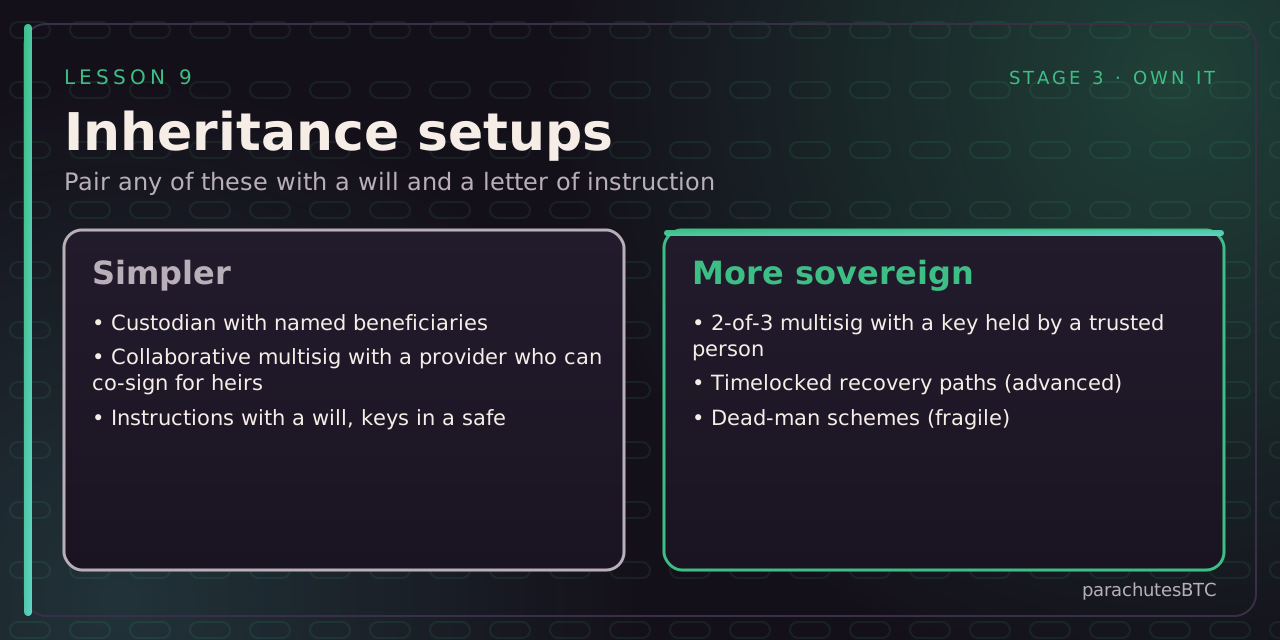
- Custodian with beneficiaries. If part of your holdings is with a reputable custodian, name beneficiaries. Simple; applies only to coins held there.
- Collaborative multisig. A provider holds one key and can co-sign with your heirs under a documented process. Heirs need no technical skill beyond following instructions.
- 2-of-3 with a trusted person. You hold two keys; a trusted person holds the third with instructions to combine it with a key your heirs can find. Nobody can act alone while you live.
- Letter of instruction. Whatever the setup, a sealed letter (with your will, or with a lawyer) explaining what exists, where the backups are, what software to use and who to ask for help. It must not contain the seed itself unless its storage is as secure as the seed's.
Test it
Walk a trusted person through the instructions without the real keys. If they cannot follow them, neither will your heirs under grief. Review the plan yearly; software and devices age.
Tax
Inherited assets have their own tax treatment, which varies by country and changes. In the US, heirs typically receive a stepped-up cost basis. The Taxes and estate planning course covers it; a local professional is the right source for your case.