
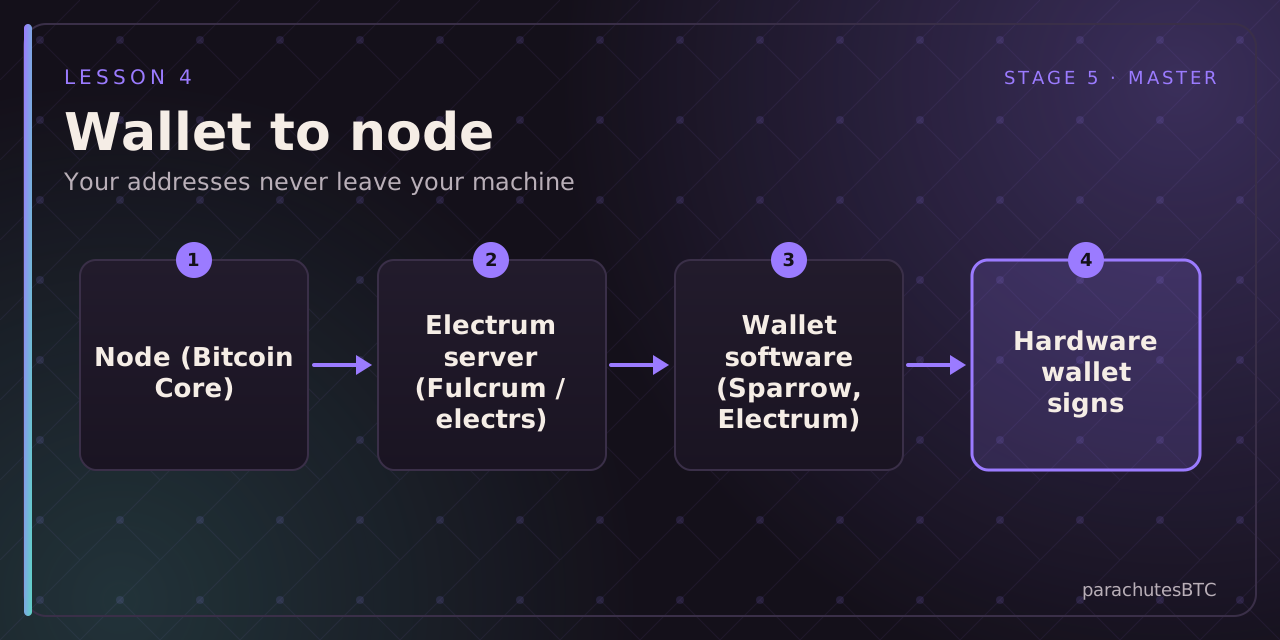
A synced node is a verification machine; your wallet needs a way to ask it questions. Most desktop wallets speak the Electrum protocol to a server that indexes the chain by address.
Options
- Bitcoin Core's own wallet. Built in, needs no server, supports descriptors and PSBTs. Fine, but less friendly than dedicated wallet software.
- An Electrum server on your node. Fulcrum or electrs build an address index from your node's data. Turnkey bundles include one with a click; on Core you install it alongside. Then point Sparrow, Electrum, BlueWallet or your hardware wallet's software at your server instead of the public default.
- Direct Core connection. Sparrow can talk to Core's RPC directly without an Electrum server, with some feature limits.
Why it matters
Every wallet that uses a public Electrum server tells that server all your addresses. The server operator, and anyone who compromises or compels them, learns your balance and history. Your own server answers from your own data. This is the single biggest privacy improvement most holders can make.
Checklist
- Server synced and reachable on your local network (or over Tor).
- Wallet configured to use only your server, with the public fallback disabled.
- Test: create a new address, send a small amount, watch it appear from your node.
- If the wallet shows a balance faster than your node has synced, it is using someone else's server; check the settings.
CHECK YOURSELF
pick an answer for each question