
People imagine miners "run" Bitcoin. They secure it. The distinction matters.
What miners can do
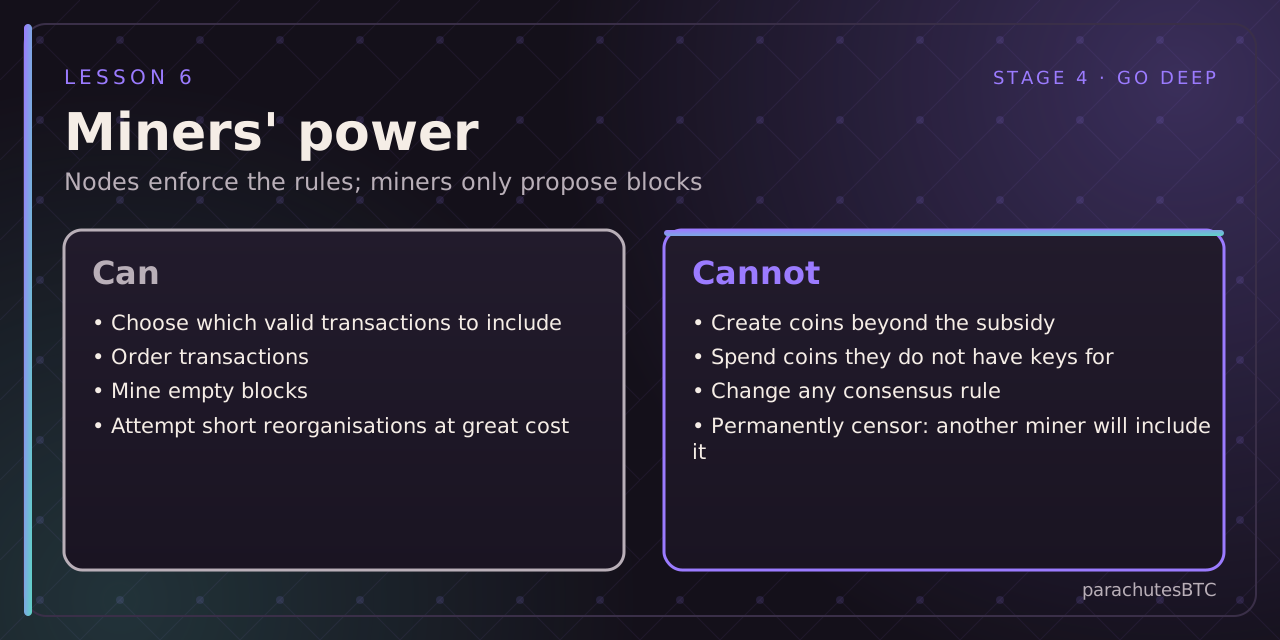
- Select and order transactions within a block. A miner can leave yours out.
- Mine empty blocks (rare, wasteful of fees).
- With a majority of hash rate, attempt a 51% attack: reorganise recent blocks to double-spend their own coins. This has never happened on Bitcoin; it would cost billions in hardware and power and destroy the value of the attacker's own reward.
What they cannot do
- Create coins beyond the schedule. Nodes reject the block.
- Spend coins they do not hold keys for. Signatures are checked by every node.
- Change consensus rules. A block following different rules is simply invalid to the network.
- Permanently censor. A transaction one miner excludes will be included by another; censorship requires every miner to agree, forever.
The 2017 test
Most miners and large companies backed SegWit2x, a hard fork doubling the block size. Node operators and users refused, and BIP 148 set a date to enforce SegWit regardless of miner signalling. Miners conceded. Hash power proposes; the economic majority running nodes disposes.
Where the real risk is
Pool concentration and regulatory pressure on large public miners could enable temporary censorship of sanctioned addresses. Stratum V2, more miners, and more pools are the answers the industry is pursuing. Running a node is yours.
CHECK YOURSELF
pick an answer for each question