
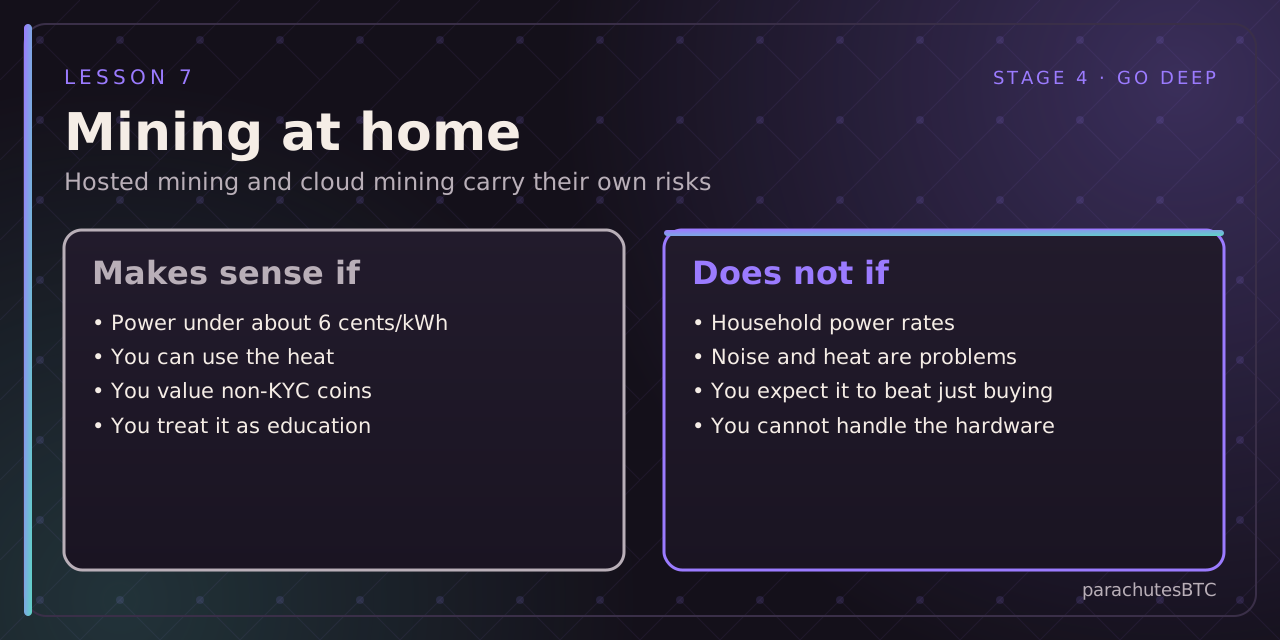
The honest math
At typical household rates (10 to 20 cents per kWh) an ASIC loses money every day compared with buying the same bitcoin. Lesson 4's worked example shows why. Serious mining runs on power at a few cents, bought in bulk, in facilities built for heat and noise.
When it does make sense
- Cheap power. Hydro, a solar surplus, a special tariff.
- Heat. A miner is a space heater that pays part of its bill. In a cold climate, heating your house or a greenhouse with hash rate changes the math.
- Non-KYC coins. Mined bitcoin arrives with no exchange record. Some people value that enough to mine at a loss.
- Education and support. Running a small miner on a pool, or a tiny "lottery" miner, teaches you the business and adds a little decentralisation. Think of it as a hobby with a chance of a prize.
Hosted and cloud mining
Hosted mining: you buy a machine and a company runs it in its facility for a fee. You own the hardware, they own the power contract. Reasonable with a reputable host; read the contract.
Cloud mining: you buy "hash power" from a website. The industry is full of fraud; the honest version offers returns below just buying bitcoin. Treat any cloud mining offer with guaranteed returns as a scam.
Miners or bitcoin?
Buying bitcoin gives you the asset. Buying mining hardware gives you a depreciating machine, operational risk and exposure to hashprice. Most people wanting exposure to bitcoin should hold bitcoin; mining is a business, and businesses are for people who want to run them.