
The strongest version
Bitcoin's early fame came from Silk Road, a darknet market. Ransomware demands bitcoin. It lets criminals move money without banks.
The facts
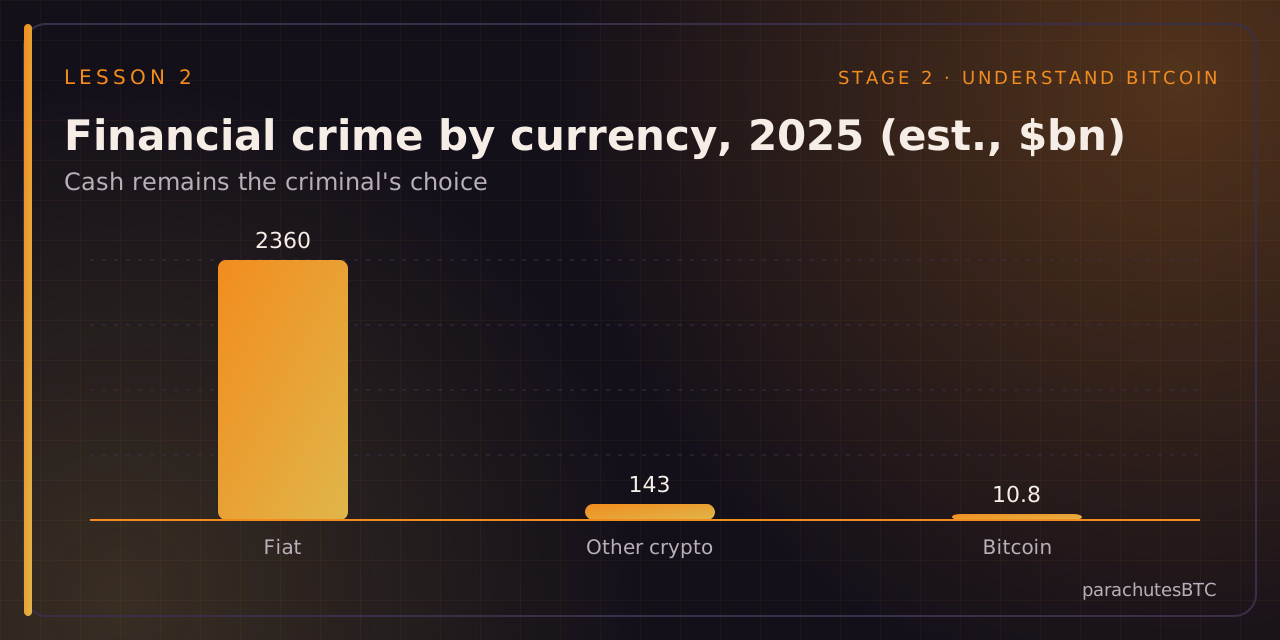
- Chain analysis firms estimate illicit activity at well under 1% of bitcoin volume, and it has trended down since 2021.
- The UN estimates fiat money laundering at 2 to 5% of global GDP, over two trillion dollars a year. Europol says cash and banks dominate financial crime.
- Bitcoin's ledger is public and permanent. Silk Road's operator was caught; Bitfinex hack proceeds were traced for six years and seized; ransomware payments are routinely followed. Investigators now describe bitcoin as a gift to law enforcement.
- Ransomware gangs increasingly avoid bitcoin for exactly this reason.
Why this one sticks
Early adopters of any technology include people who need what it offers most, and the internet, cash and cars all went through the same accusation. A tool that cannot be censored will occasionally be used by people you dislike. That is also what makes it useful to dissidents, journalists and people in failing states.
What remains true
Bitcoin can be used for crime, like any money. The claim that it is mostly used for crime is false by every available measure.
CHECK YOURSELF
pick an answer for each question