
What has happened
- El Salvador made bitcoin legal tender in 2021 and has bought steadily since, holding several thousand coins. The legal-tender status was softened in 2025 under IMF pressure; the buying continued.
- The United States saw the BITCOIN Act proposed in 2024 (a plan to acquire a million bitcoin over five years) and a 2025 executive order creating a reserve from seized coins. States such as Texas passed reserve laws.
- Other countries hold seized bitcoin (the US, UK, China) in quantities that make them large holders by accident. Bhutan mines with hydro power. Several central banks have said publicly they are studying it.
The case for
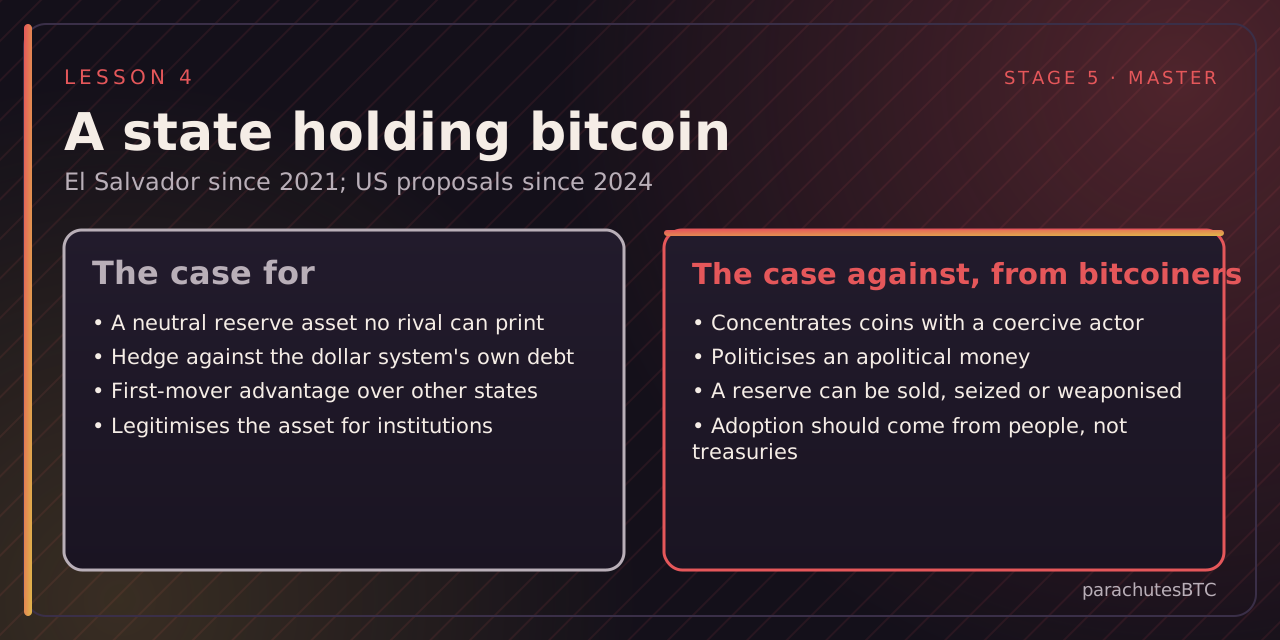
A reserve asset no rival can print, no rival can freeze (as Russia's dollar reserves were in 2022), and that benefits early holders at later holders' expense: the same game theory that drives individuals, applied to treasuries. A state that holds it also has reason to regulate it kindly.
The bitcoiner case against
Bitcoin's point is money separate from the state. A state holding a large share concentrates coins with the most coercive actor in society, invites politicisation of what should be neutral, and creates a stockpile that a future government can sell, seize or use as leverage. Adoption that comes from millions of individuals is robust; adoption that comes from a treasury decision can be reversed by the next one.
What is true either way
State adoption is a sign that the asset is winning, not a condition of it winning. A thoughtful holder watches it without cheering, and keeps their own keys.