
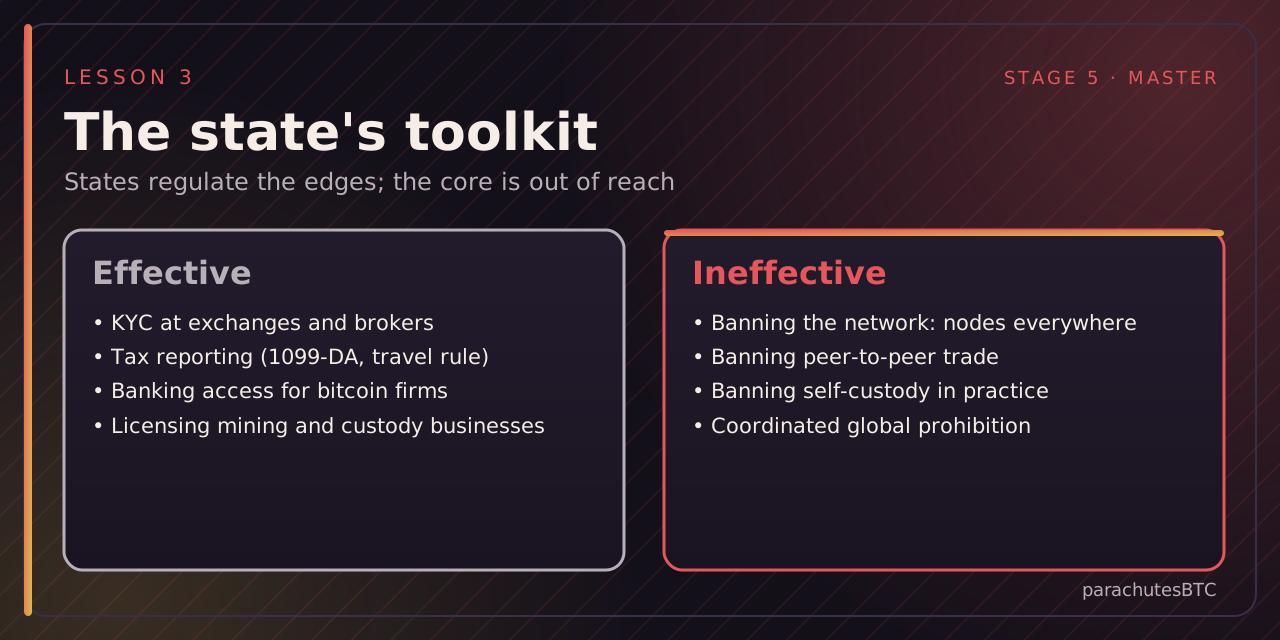
Where states have power
The places bitcoin touches the fiat system: exchanges and brokers (identity checks, reporting, licensing), banks (which can be told not to serve bitcoin companies), taxes (broker reporting, the FATF "travel rule" requiring regulated firms to share sender and receiver data), mining (energy permits, licensing) and custodians. These are effective because they are chokepoints with addresses and executives.
Where they do not
The network itself. Tens of thousands of nodes on every continent; miners wherever power is cheap; a seed phrase that is twelve words. Banning bitcoin is like banning a mathematical fact: you can ban talking about it in your jurisdiction.
The record
- China has restricted bitcoin repeatedly since 2013 and "banned" it in 2021. Mining moved abroad and partly returned; trading went peer-to-peer; Chinese miners remain a large share of hash rate.
- India banned banks from serving exchanges in 2018; its Supreme Court struck the ban down in 2020. It now taxes crypto heavily, which is a form of acceptance.
- Nigeria banned banks from serving exchanges in 2021; peer-to-peer volume rose and a premium appeared. In 2024 it reversed course toward licensing.
- The United States moved from hostile enforcement to spot ETFs, stablecoin legislation and a proposed reserve between 2023 and 2025.
The likely future
Not bans but surveillance and friction: comprehensive reporting, limits on self-custody withdrawals from regulated platforms, pressure on wallet developers, and licensing that makes compliant bitcoin convenient and sovereign bitcoin inconvenient. The response is the same it has always been: hold keys, run a node, know the law, and keep the sovereign path open for the people who need it most.