
The precedent
In 1933, Executive Order 6102 required Americans to hand their gold to the government at $20.67 an ounce; the dollar was then devalued to $35. Compliance was high because gold sat in banks and safe-deposit boxes, where it could be inventoried. The lesson was not that gold failed; it was that custodians make confiscation easy.
How seizure works now
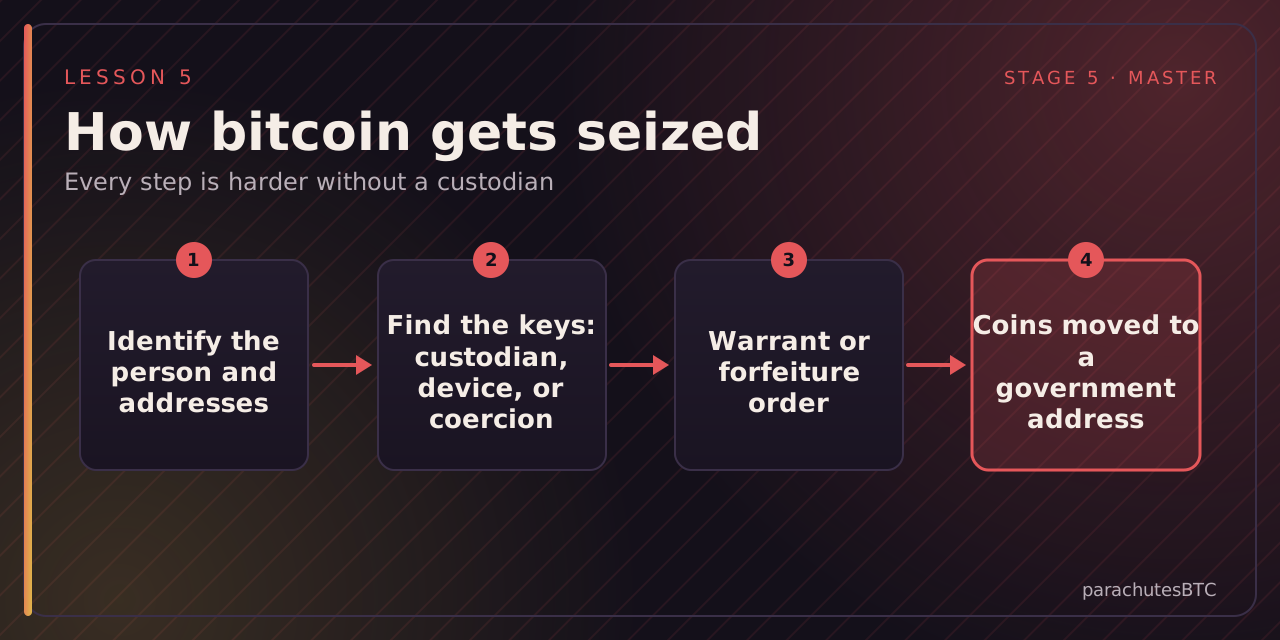
Law enforcement seizes bitcoin by obtaining the keys. With a custodian, that is a warrant to the company, which complies. With self-custody, it means finding the device and backup, or compelling the holder, usually through a plea arrangement. Large US seizures (Silk Road, the Bitfinex hack) came through custodians, devices found in searches, and defendants trading keys for leniency. Only the US Marshals can auction seized coins.
Why it matters beyond crime
Most readers are not targets of forfeiture. The relevance is structural: an asset that cannot be taken without your participation changes the balance between the individual and the state. Capital controls, bank bail-ins (Cyprus 2013), frozen accounts of protesters (Canada 2022), and currency confiscations in failing states all run through custodians. Self-custodied bitcoin makes each of them an act that requires finding a person, not sending a letter.
The honest limits
Self-custody does not make you immune to law: you can be ordered to disclose, fined, or jailed for refusing. It makes seizure expensive and visible rather than administrative. That is a large difference, and it is the whole reason the custody question is political as well as technical.
Practical implications
Keep savings in your own keys; keep the amount and the setup private; know the law where you live; and understand that the privacy of your holdings is the first layer of their security.