
The cypherpunks argued that privacy and freedom in a digital age require tools that do not ask permission. Bitcoin is the first such tool for money. Here is where it has been used that way.
Documented cases
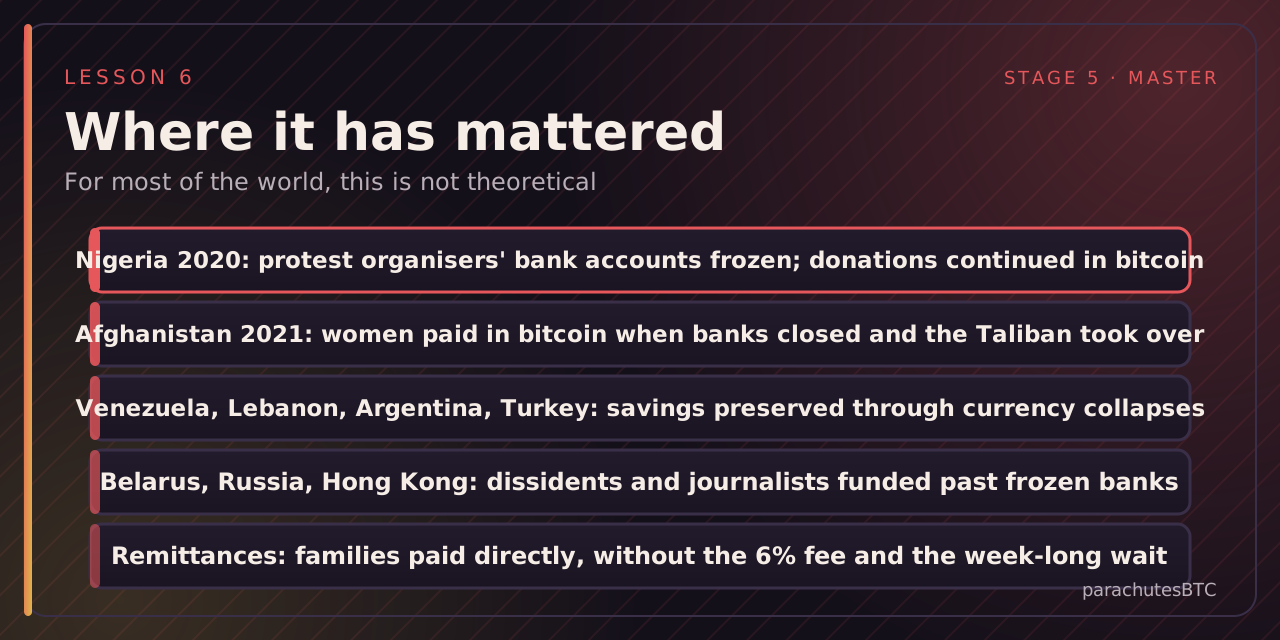
- Nigeria, 2020. During the #EndSARS protests, the organisers' bank accounts were frozen. Donations continued in bitcoin, and the movement's funds could not be stopped.
- Afghanistan, 2021. When banks closed and the Taliban returned, a non-profit paid women in bitcoin they could hold on their phones and spend or convert quietly.
- Venezuela, Lebanon, Argentina, Turkey. People whose currencies lost most of their value in a few years used bitcoin (and dollars, and stablecoins) to keep what they had earned.
- Belarus, Russia, Hong Kong. Opposition groups, independent journalists and activists have received funding in bitcoin after being cut off from banks.
- Remittances. Migrant workers send over $900 billion home a year, paying around 6% on average and waiting days. Bitcoin and Lightning move the same money in minutes for cents.
The Human Rights Foundation documents these and funds the development of tools that make them easier; Alex Gladstein's Check Your Financial Privilege is the book-length account.
The counter-argument, and the reply
Critics note that criminals and sanctioned states also use uncensorable money. True, and the share is small (see the FUD course). A tool that only worked for people the powerful approved of would not be the tool in question. Cash has the same property, and no one proposes banning it for that reason, though CBDCs would in effect do so.
Why a maximalist cares
This is the moral case, and it is why bitcoiners are impatient with projects that reintroduce an issuer, a foundation or a freeze button. A money that can be stopped is a money that will be stopped for exactly the people who need it most.