
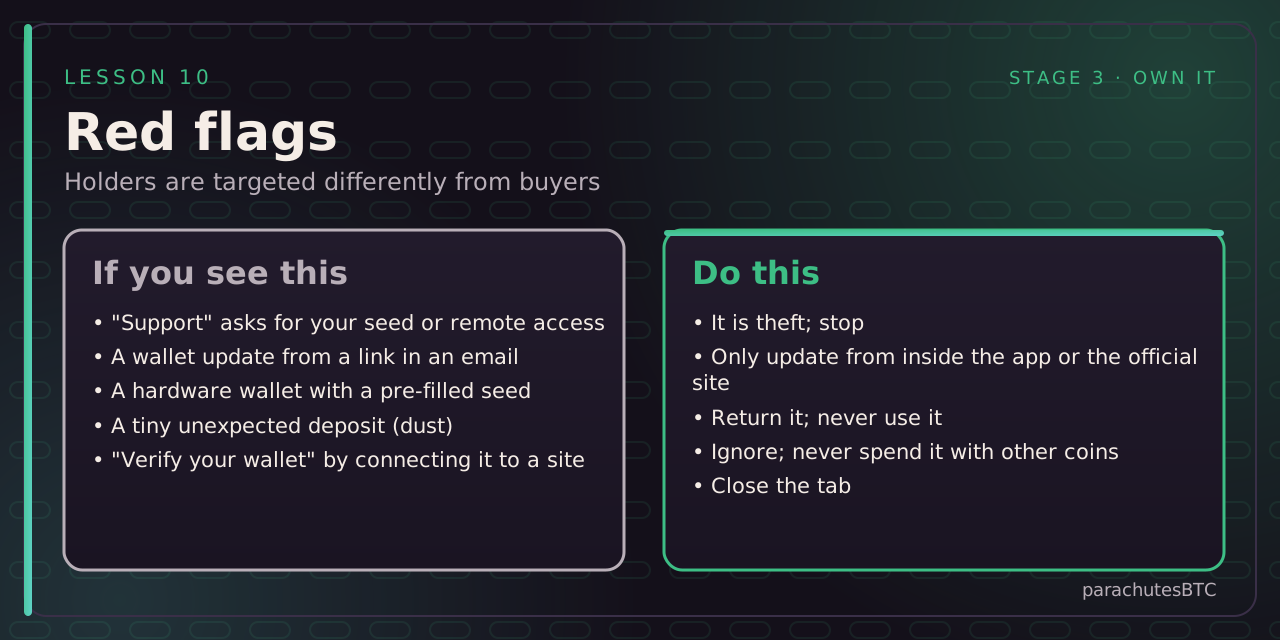
The Your first bitcoin course covered scams aimed at buyers: giveaways, romance, Ponzis. Holders of self-custodied bitcoin are targeted differently.
The shapes
- Fake support. You post a question in a forum; a "support agent" DMs you offering help and asks for your seed, or to install remote-access software, or to "validate" your wallet on a site. Real support never does any of these.
- Fake updates. An email says your hardware wallet needs an urgent firmware update, with a link. The link installs malware or asks for your seed. Update only from inside the official app or by typing the maker's site yourself.
- Tampered hardware. A device from a reseller or marketplace that arrives with a seed card "for your convenience", or with modified firmware. Buy direct; generate your own seed.
- Dust and address poisoning. A tiny deposit from an address that mimics yours, hoping you copy it from your history; or dust sent to link your addresses when you spend it. Do not spend dust; compare whole addresses.
- "Connect your wallet." Sites that ask you to connect or sign a message to claim an airdrop or verify ownership. On Bitcoin, signing a message is mostly harmless, but these sites are phishing for seeds or pushing malware.
- Clipboard hijackers. Malware that swaps the address you paste. Confirm on the hardware screen.
The rule, again
Nobody legitimate needs your seed, your private keys, or remote access to your computer. Anyone creating urgency is the attacker. Slow down, close the message, and go to the official source you typed yourself.
CHECK YOURSELF
pick an answer for each question