
The question every new Lightning user hits: "why can't I receive?" The answer is liquidity.
Two sides of a channel
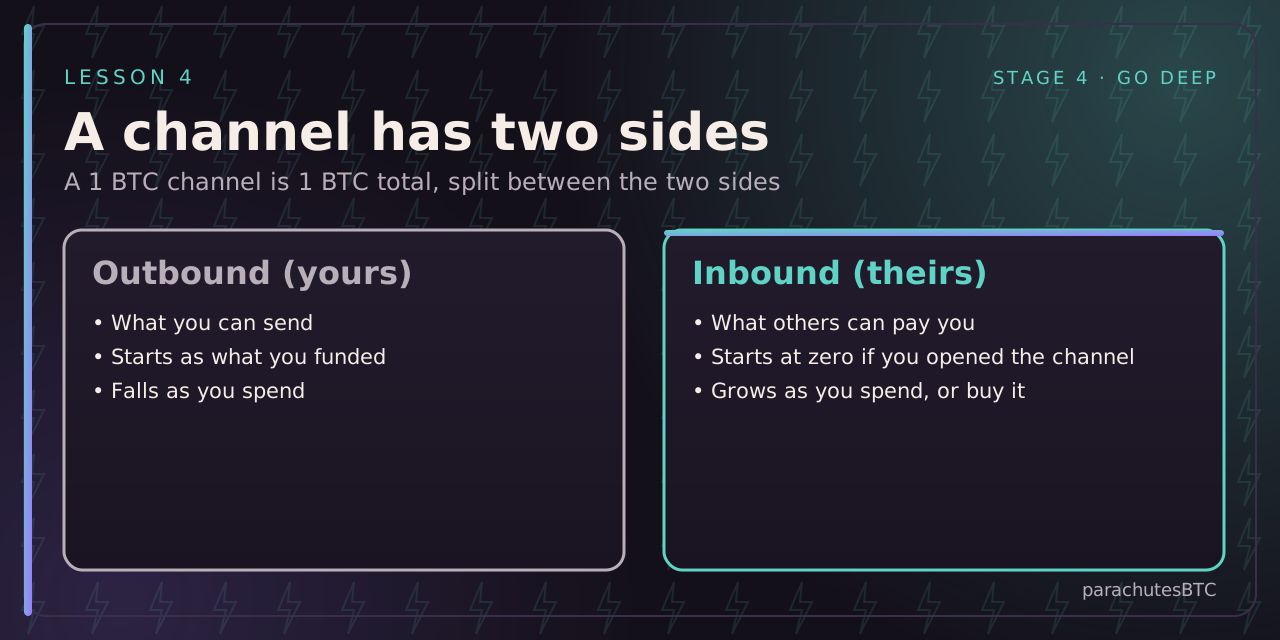
A channel has a fixed capacity, split between the two parties. Your side is your outbound liquidity: what you can send. The other party's side is your inbound liquidity: what they can send to you, which is what others can pay you through them.
If you open a 1 million sat channel by funding it yourself, all 1 million is on your side. You can send up to 1 million and receive nothing until you have sent something, which moves balance to the other side.
Getting inbound
- Spend first. Every payment out creates room to receive.
- Buy it. Liquidity providers will open a channel to you for a fee, or you can swap: send bitcoin to a service on-chain and receive it on Lightning (a submarine swap), which fills your inbound side.
- Let the wallet do it. Consumer wallets handle this automatically, charging a fee the first time you receive.
Why it is like this
Lightning payments move existing funds along paths; they do not create balance. Liquidity must be placed where payments will flow. Routing nodes make a business of this, earning fees for keeping balanced channels in useful places.
For most people
Use a wallet that manages it. Understand that the first receive may cost a small fee, and that a "balance" on Lightning is really capacity in channels.
You opened a 500,000 sat channel with your own funds and have since sent 150,000 sats through it. How much can you now receive through that channel, in sats?