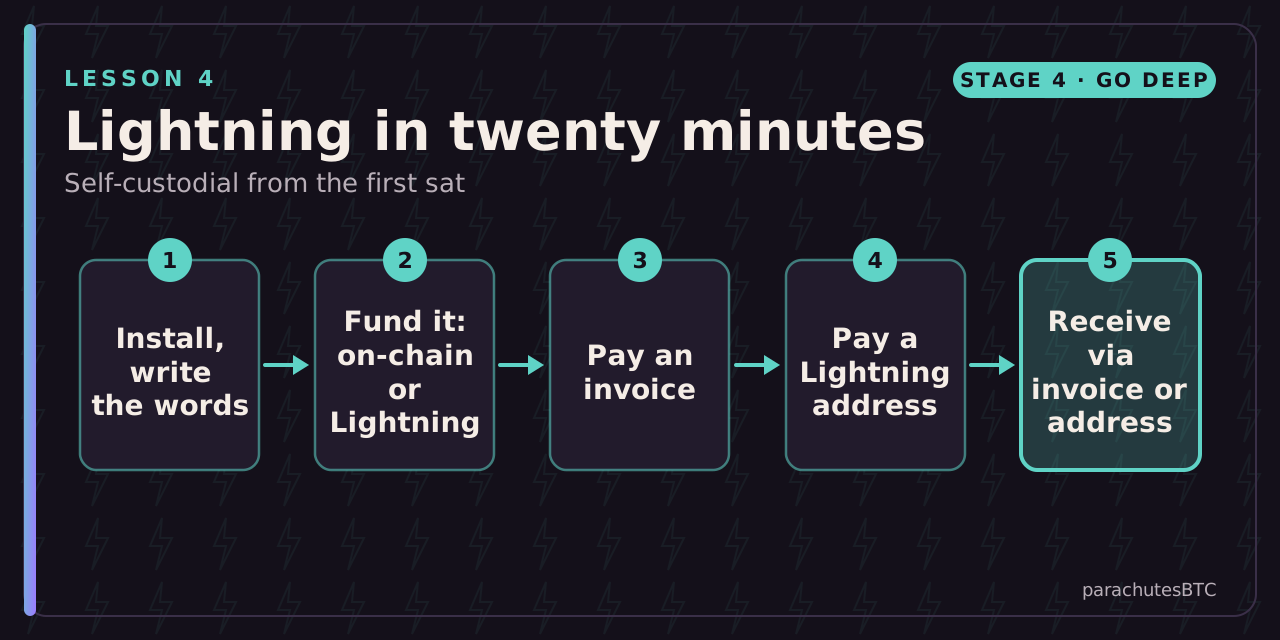
Install a self-custodial Lightning wallet (Phoenix or Aqua as the worked examples), fund it, pay an invoice and a Lightning address, receive both ways, and understand the one fee that surprises people.
Before you start: A phone, a few dollars of bitcoin on an exchange or in your on-chain wallet, and twenty minutes.
IN THIS LESSON · 4 OF 8
BY THE END YOU WILL BE ABLE TO ANSWER
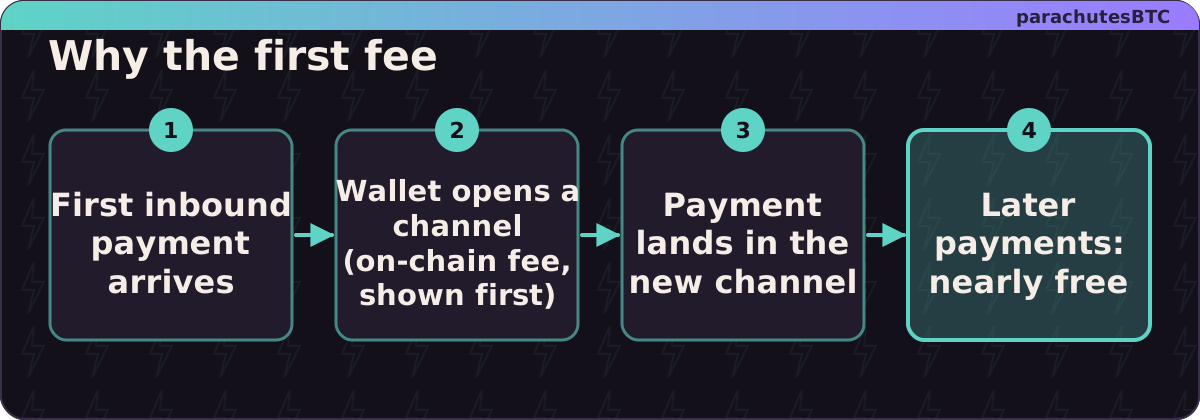
Why did the first inbound payment cost a visible fee on Phoenix?
What is the difference between a Lightning invoice and a Lightning address?
What makes Phoenix and Aqua self-custodial?
Your wallet opened a channel for a first inbound payment of 20,000 sats and showed a fee of 600 sats. What percentage of the payment was that fee?
Then prove it: a 3-question quiz · a challenge. The lesson marks itself complete at 100%.
After this lesson you can: send and receive Lightning payments from keys you hold, and explain why the first receive cost more than the rest.
Two worked examples
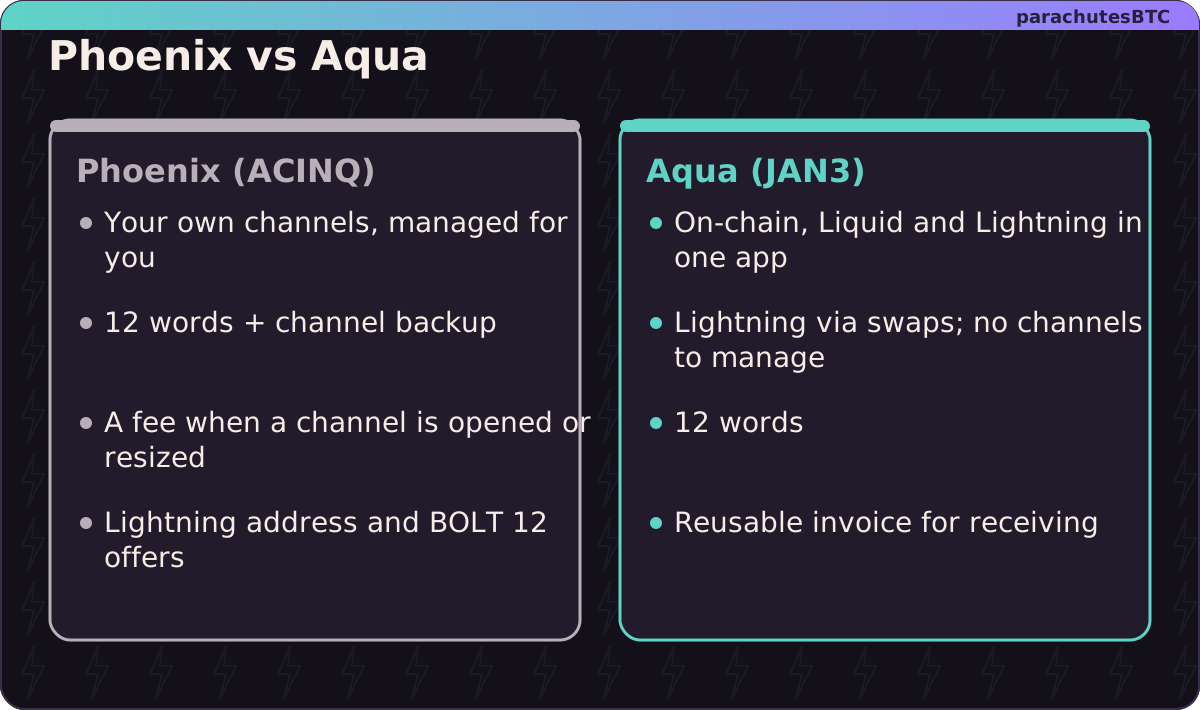
Phoenix (by ACINQ) is a self-custodial Lightning wallet that manages channels for you: there is nothing to open, and its backup is a 12-word seed plus an encrypted channel backup it keeps on your behalf. When it needs more capacity it opens or resizes a channel and charges a fee it shows you first. Aqua (by JAN3) is a self-custodial wallet for on-chain, Liquid and Lightning; Lightning payments run through swaps rather than your own channels, so there is no channel to think about. Either is fine for this lesson; the keys are yours in both.
Phoenix Bitcoin Wallet: Lightning Self Custody Made Easy - Full Tutorial 2025 · BTC SessionsWatch on YouTube ↗
Steps
Two routes to the same result: Lightning payments from keys you hold. Examples, not endorsements.
Bitcoin, Lightning and Liquid - All in Aqua Wallet · BTC SessionsWatch on YouTube ↗
What you learned by doing it
The first receive lays the pipe; everything after flows through it.
The invoice is a request; the address is a reusable request; the channel is the pipe; the first fee was the pipe being laid. Everything in the next lesson, liquidity, is about that pipe.
MINI CHALLENGEThe pipe-laying fee
Your wallet opened a channel for a first inbound payment of 20,000 sats and showed a fee of 600 sats. What percentage of the payment was that fee?
percent
600 / 20,000 x 100.
3% once, then near zero for the rest of the channel's life. Receiving a larger first amount makes the percentage smaller.
01Because the wallet opened a channel to give you inbound capacity, which costs an on-chain transactionThe pipe is laid once; later payments through it are nearly free.
02An invoice is a one-time request for a fixed amount; an address is reusable and the payer picks the amount`lnbc...` is an invoice; `name@domain` is an address.
03You hold the seed words, and the company cannot move your fundsCustody is about who holds the keys, not who wrote the app.