
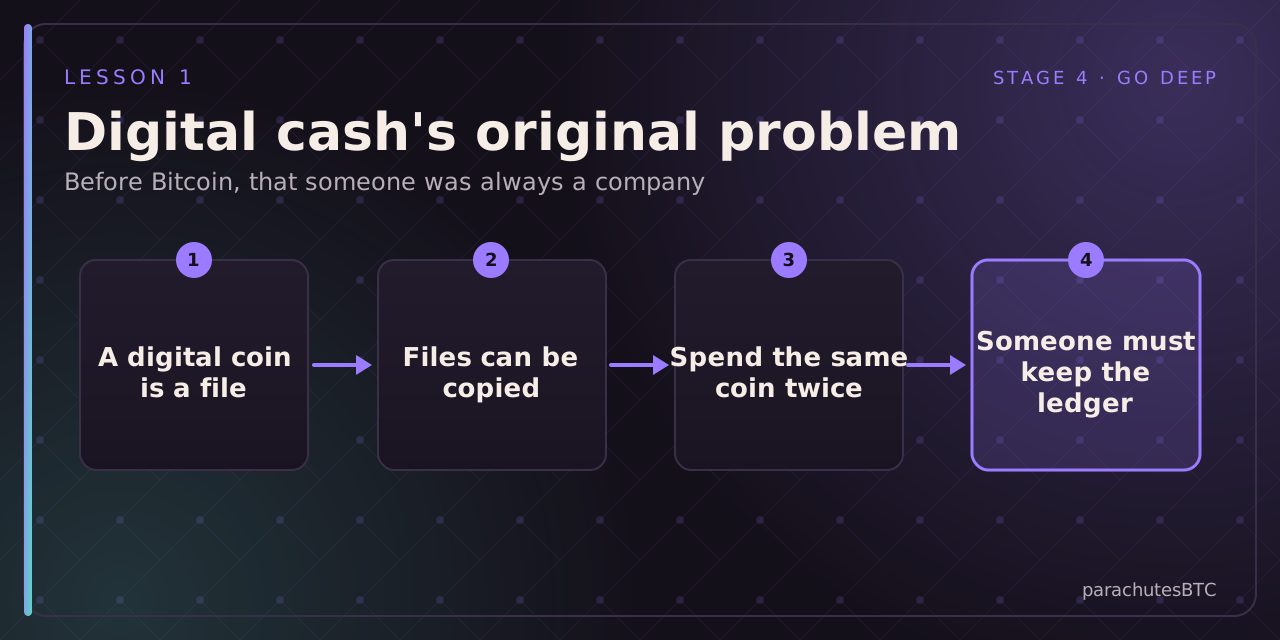
Cash works because handing over a note removes it from your pocket. A digital coin is data, and data can be copied. If I send you a coin and keep a copy, I can send the same coin to someone else. This is the double-spend problem.
The old solution
Keep a ledger. PayPal, banks and every pre-Bitcoin digital cash scheme solved double spending by having one trusted party record who owns what. That works, and it means the party can freeze you, charge you, lose your money, be hacked, or be ordered to do any of those things.
The hard version
Could strangers keep a shared ledger with no one in charge? Computer scientists had a name for the difficulty: the Byzantine Generals Problem. Several generals must agree on a plan by messenger, some may be traitors, messages may be lost, and there is no commander. Agreement without a leader was believed to require known, limited participants.
Satoshi's move
Bitcoin's answer was not to pick a trustworthy leader but to make writing to the ledger cost something (proof of work), make every participant check everything (nodes), and let the version with the most work behind it win (the longest chain rule). Nobody needs to know or trust anyone else. The rest of this course is the detail of those three ideas.