There are more ways to get bitcoin than most people realise. The right one depends on how much, how fast, and how private you want to be.
The main routes
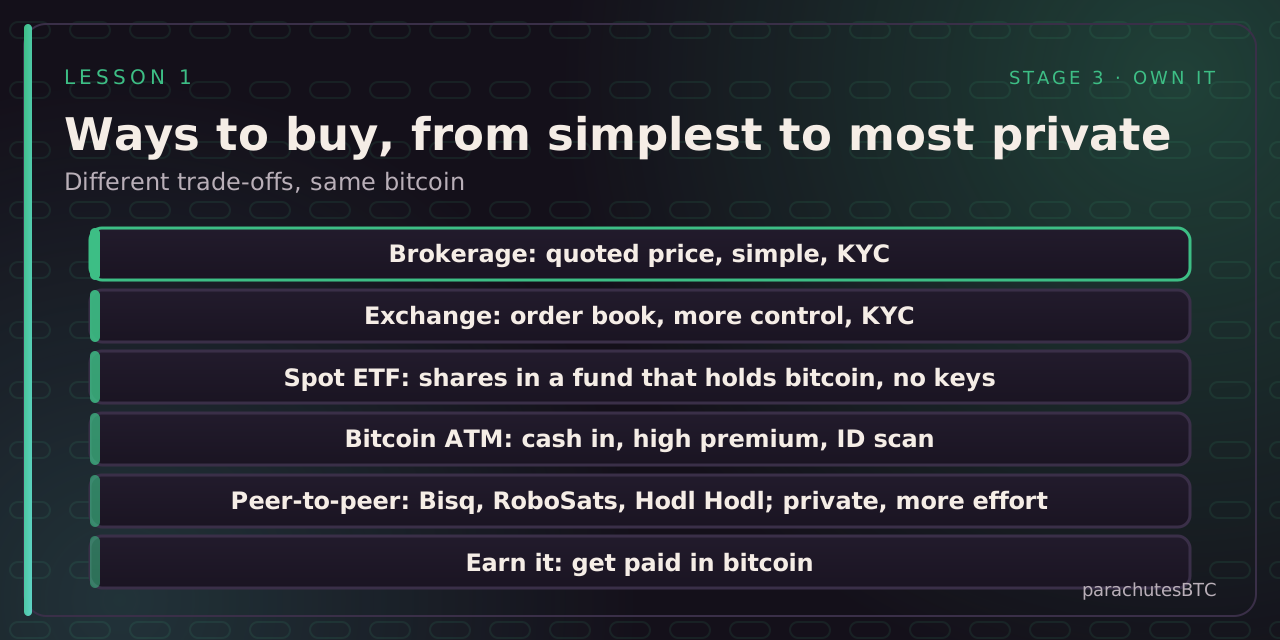
- Brokerage. You buy from the company at a quoted price, usually with a spread or fee of around 1%. Simple, fast, and the usual first step. Requires identity verification (KYC).
- Exchange. You trade on an order book against other users. Lower fees for larger amounts, more buttons to get wrong. Also KYC.
- Spot ETF. Shares in a fund that holds bitcoin with a custodian. Convenient inside a brokerage or retirement account, but you own shares, not coins, cannot withdraw bitcoin, and pay an annual fee.
- Bitcoin ATM. Cash in, bitcoin out, usually at a premium of 5 to 15% and with an ID scan.
- Peer-to-peer. Platforms such as Bisq, RoboSats and Hodl Hodl match you with another person, with multisig or Lightning escrow. No KYC, more effort, smaller amounts.
- Earning it. Getting paid in bitcoin for work, which has no purchase at all.
What matters
Whatever the route, two things decide your experience afterwards: whether you can withdraw to your own wallet, and whether you understand the fees. Fees are often hidden in the spread between the buy and sell price rather than shown as a line item.
CHECK YOURSELF
pick an answer for each question