
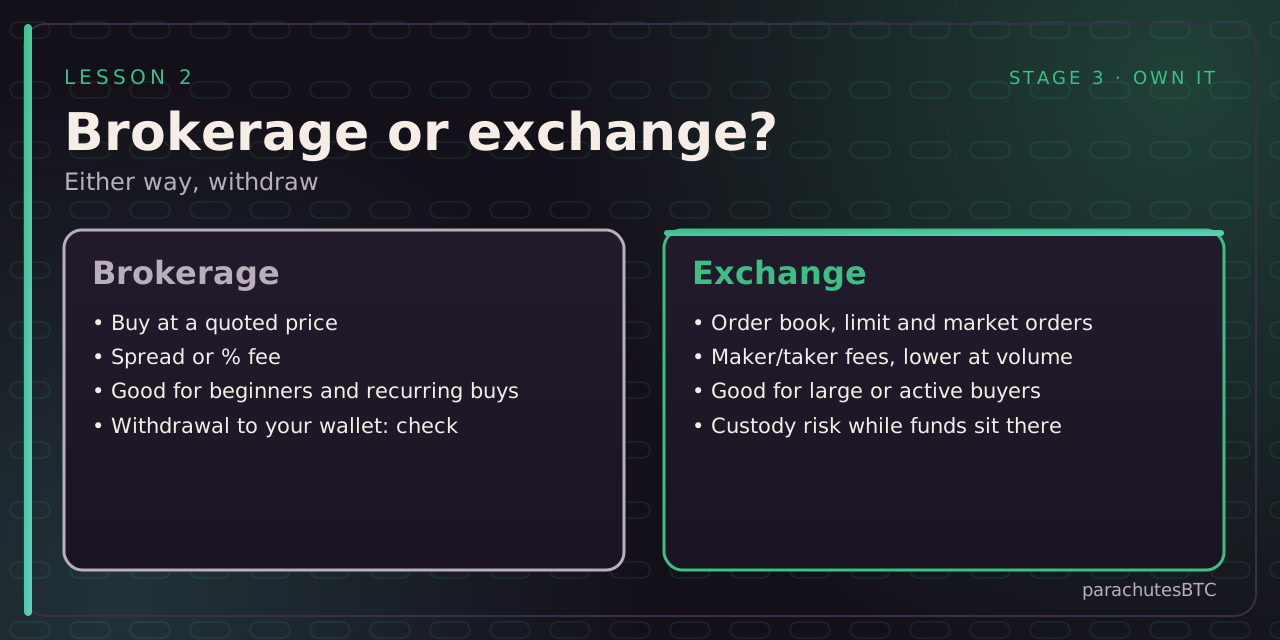
Brokerage
A brokerage takes the other side of your trade. You see a price, you accept it, done. The cost is a spread above the market price or a percentage fee. Good brokerages offer recurring buys, clear statements and easy withdrawal to your own wallet. For most beginners this is the right starting point.
Exchange
An exchange runs an order book. You can place a market order (fill now at the best price) or a limit order (fill only at your price). Fees are usually tiered: lower if you add liquidity ("maker") or trade a lot. Depth charts, slippage and order types are a learning curve, and the interface is designed for trading, which is not the same as saving.
The thing they share
Both are custodians while your bitcoin is on the platform. The history of exchanges is a history of failures: Mt. Gox in 2014, FTX in 2022, and many between. A good platform publishes proof of reserves, keeps customer coins in cold storage and does not lend them out. A great plan does not depend on any of that, because you withdraw.
Questions to ask any platform
- Can I withdraw to my own wallet, and what does it cost?
- What is the all-in cost of a $100 buy, including spread?
- Does it offer recurring buys and Lightning withdrawals?
- Where are customer coins held, and does it publish proof of reserves?