Bitcoin cannot be reversed, so it attracts scammers. Almost none of them hack anything. They talk you into handing it over.
The six patterns
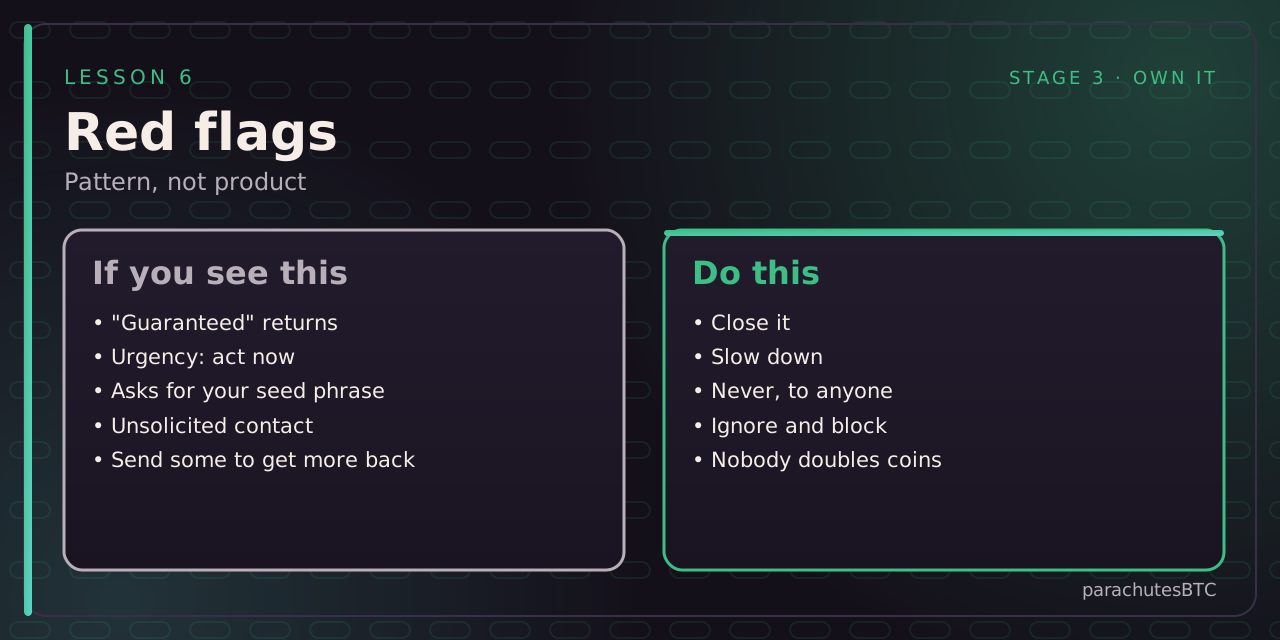
- Giveaways and doublers. "Send 0.1 BTC and get 0.2 back." Often from fake accounts of famous people. Nobody doubles coins.
- Impersonated support. A "support agent" on social media or in a DM offers help, then asks for your seed phrase or remote access to your computer. Real support never needs either.
- Investment schemes. Fixed or guaranteed returns, referral bonuses, a slick app. These are Ponzis. Any "guaranteed 10% a month" is a scam, every time.
- Romance and "pig butchering". A friendly stranger builds a relationship over weeks, then introduces a trading platform. Deposits go in; withdrawals never come out.
- Phishing. Emails and texts with links to look-alike sites. Bookmark the real site and type it yourself.
- Address poisoning and clipboard malware. A dust payment from an address that looks like yours, hoping you copy it later; or malware that swaps the address you paste. Always compare the full address.
Newer: deepfake videos of executives and celebrities endorsing schemes. One finance worker paid $25 million after a video call with deepfaked colleagues.
The one rule
If someone contacted you first, wants you to hurry, asks for keys or remote access, or promises returns, stop. Verify through the official site you typed yourself. The feeling of urgency is the tell.
CHECK YOURSELF
pick an answer for each question