
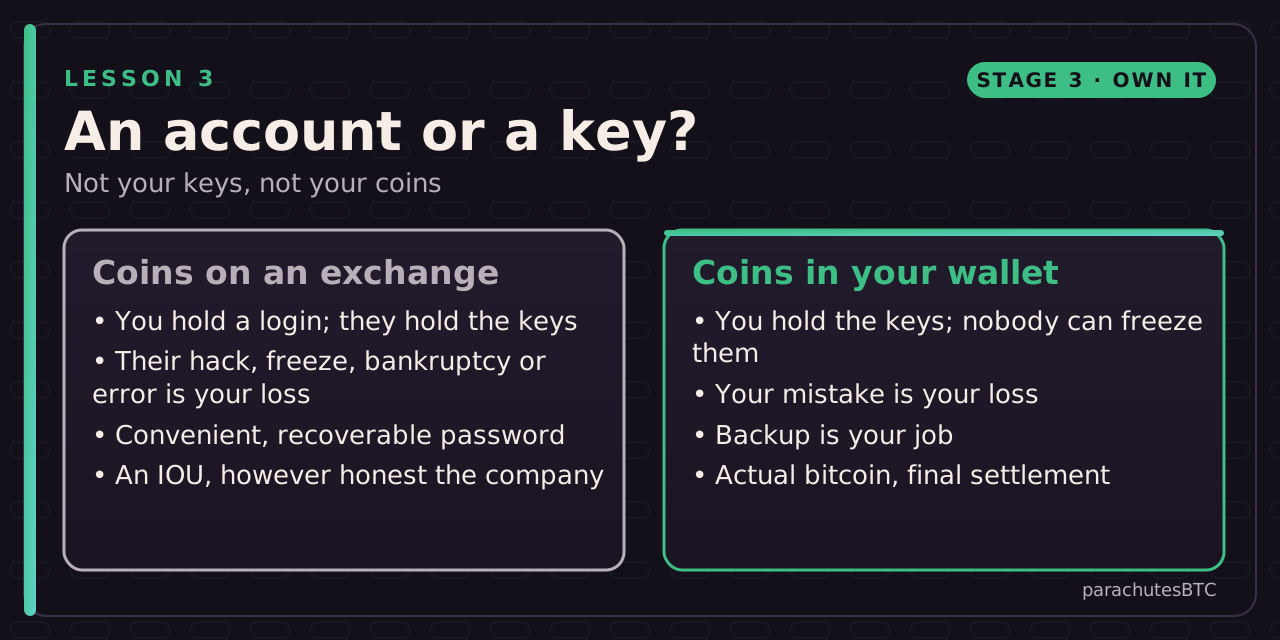
After this lesson you can: explain "not your keys, not your coins" precisely, name what can go wrong with a custodian, and say what self-custody asks of you in return.
Two very different things with the same name
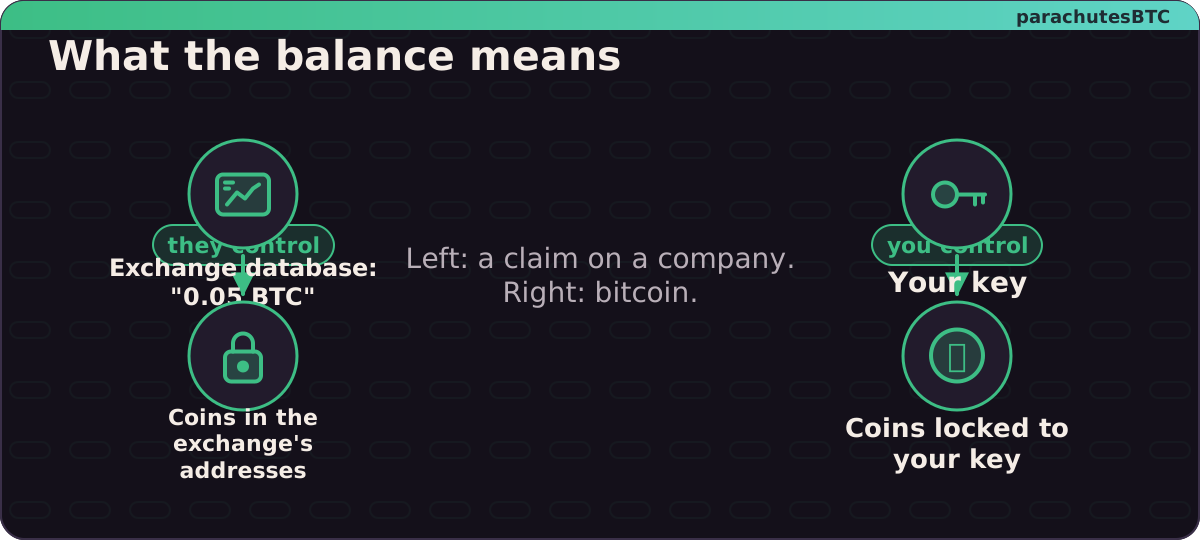
When your exchange app shows "0.05 BTC", that is a line in the company's database. The bitcoin itself sits in addresses the company controls. You own a claim on the company. When your own wallet shows 0.05 BTC, the coins are locked to a key that only you hold. You own bitcoin.
The difference is invisible when everything works. It is total when something breaks.
Counterparty risk
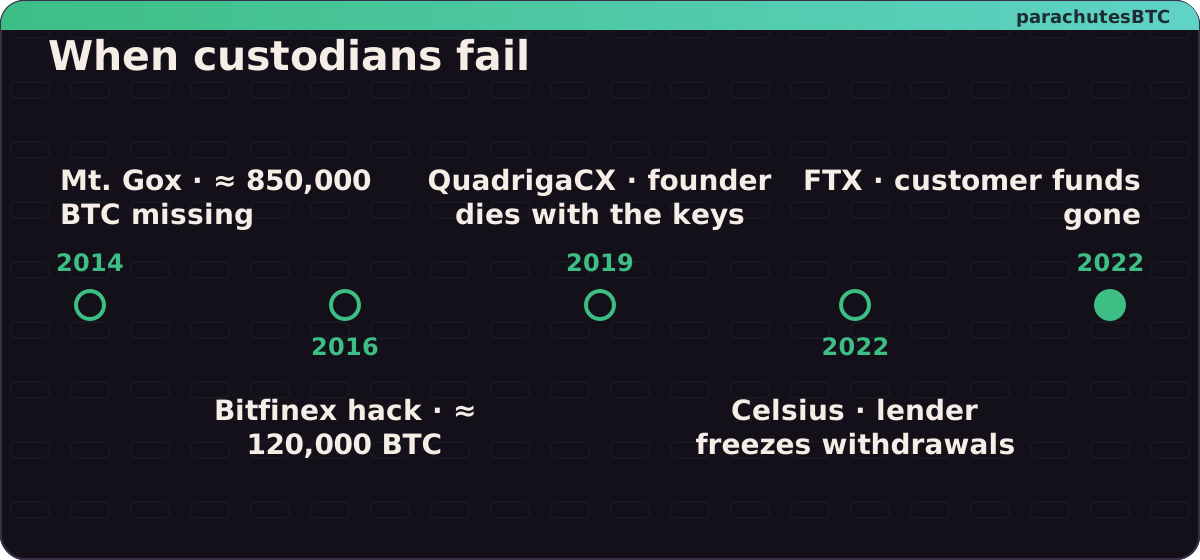
A custodian can fail you in four ways: it gets hacked, it goes bankrupt (often because it lent out or lost customer coins), it freezes your account for a compliance reason you cannot appeal quickly, or it simply makes an error. None of these are hypothetical.
- Mt. Gox, 2014. Around 850,000 BTC missing from what was then the largest exchange.
- QuadrigaCX, 2019. The founder died holding the only keys.
- Celsius, 2022. A lender froze withdrawals, then filed for bankruptcy.
- FTX, November 2022. Customer deposits had been used elsewhere; when customers rushed to withdraw, the money was not there.
In every case the people who had withdrawn lost nothing.
What self-custody asks in return
Holding your own keys removes the counterparty. It adds a different responsibility: the backup. If you lose the words and the device, no support desk can help. Roughly a fifth of all bitcoin is estimated lost this way. So self-custody is the most sovereign option, and it is also the one where your own habits matter most. The next course, Self-custody essentials, is about those habits.
An honest middle
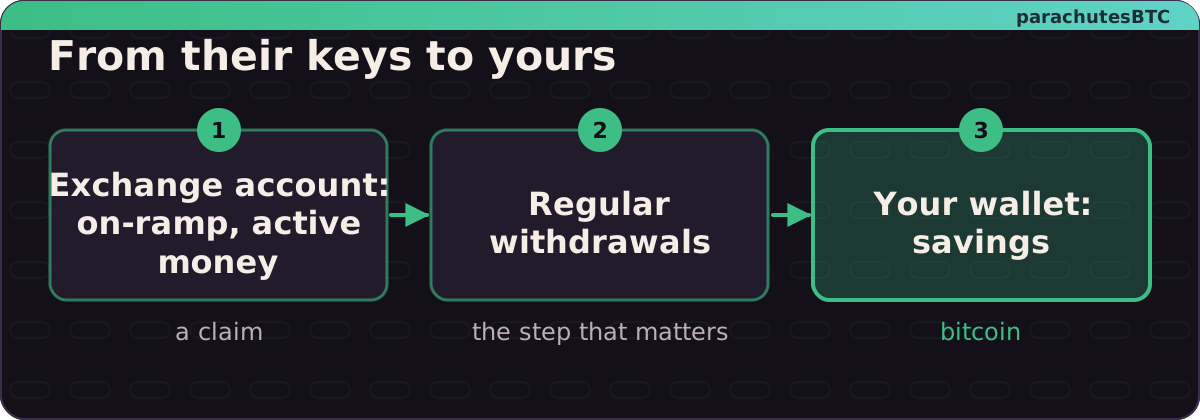
Most people do both. A custodial account for the amount you are actively buying with and would keep in a checking account, withdrawn regularly to a wallet you control for savings. The custodian's job is to be a good on-ramp; proof of reserves (next lesson) tells you whether it is at least holding what it says. Your wallet's job is to hold what you are not willing to lose to someone else's mistake.
How many accounts (exchanges, apps, ETFs) currently hold bitcoin on your behalf?