
Your wallet does not contain bitcoin. The coins are entries on the shared ledger. What your wallet holds is the private keys that can sign transactions moving them.
The chain of derivation
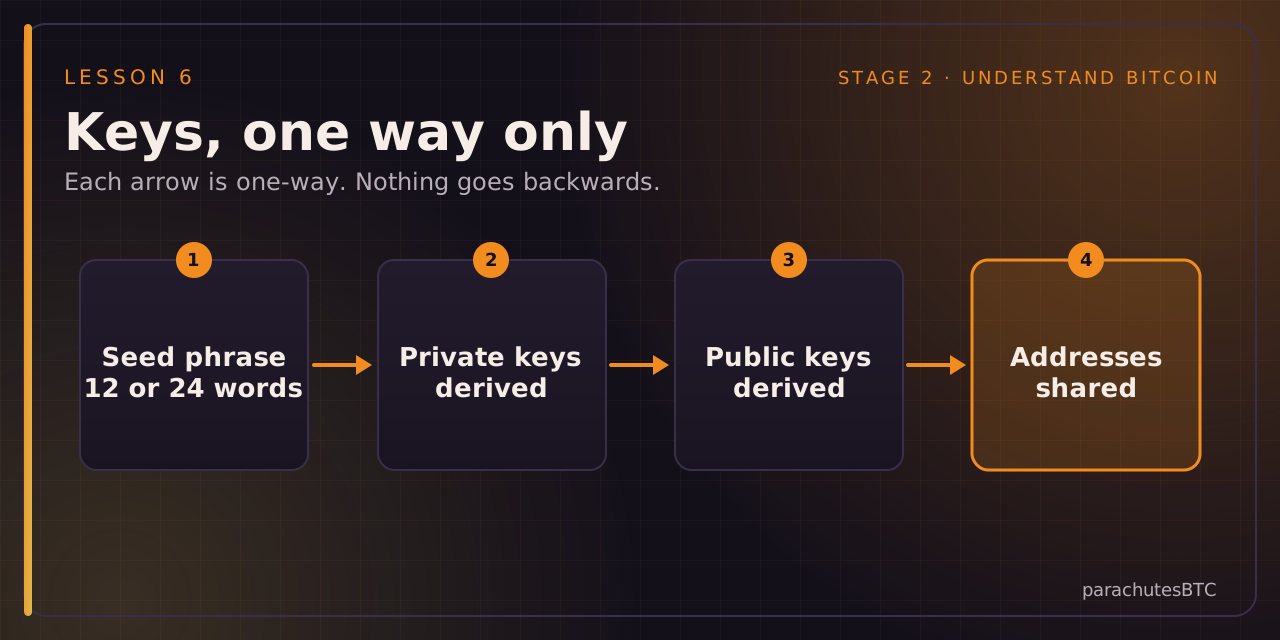
Modern wallets start from a seed phrase: 12 or 24 words from a fixed list of 2,048. From that seed the wallet derives an unlimited tree of private keys, from each private key a public key, and from each public key an address. Every arrow runs one way. You can regenerate everything from the words; you cannot work back from an address to a key.
What that means in practice
- Back up the words once, on paper or metal, and you have backed up every address the wallet will ever create.
- Anyone with the words has your coins. No service will ever legitimately ask for them.
- Lose the words and the device, and the coins are gone. There is no "forgot password".
Custody is a choice
You can hold keys yourself (self-custody) or let a company hold them (custodial). A custodian is convenient and can help with recovery. It can also be hacked, go bankrupt or freeze your account, and what you own then is a claim against the company. The Self-custody essentials course covers the practice.
Tap a card to flip it.