
ORIGINAL SOURCE
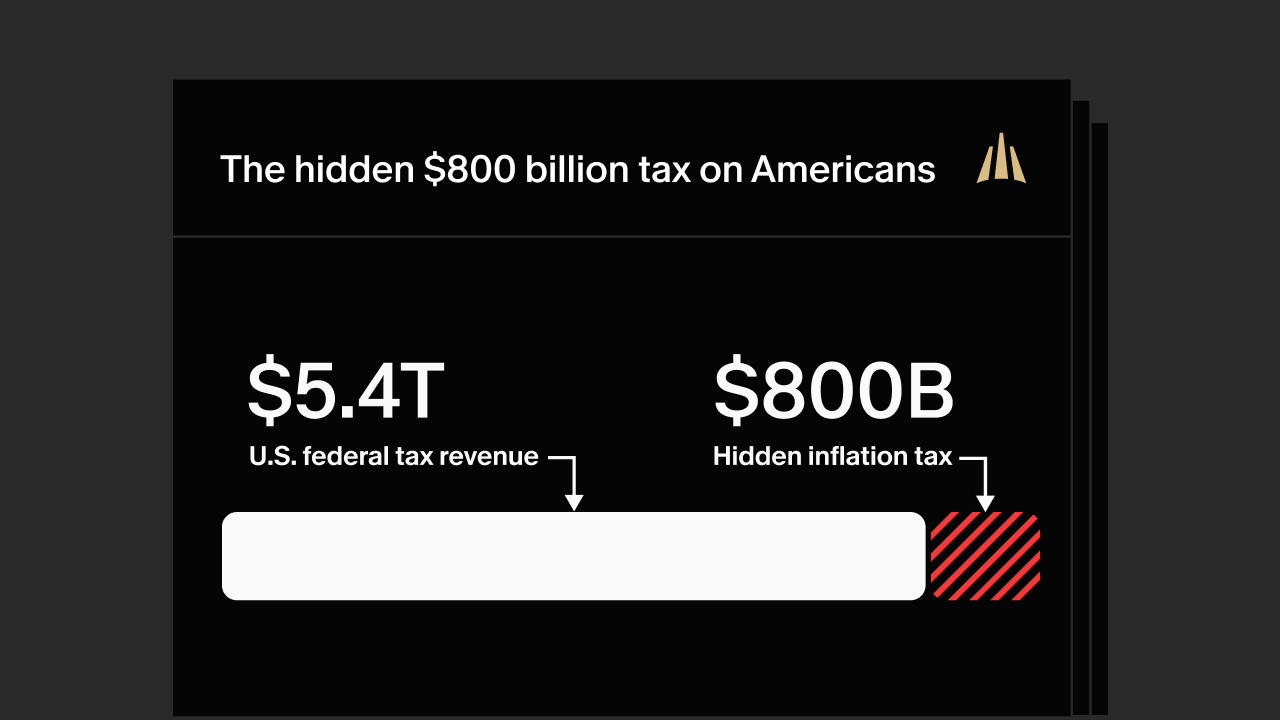
The hidden $800 billion tax on Americans
Sam Baker · River · 30 Sept 2026
KEY POINTS
- Inflation is described as a tax people do not vote on, paid by anyone holding money.
- The article puts the cost at about $800 billion a year, or $6,000 per household.
- It says the money supply has grown about 7% a year since 1970 and prices about 4% a year.
- It concludes that people can protect themselves with assets that cannot be created at will.
River's article argues that when new money is created, the purchasing power of existing dollars falls, and that this works like a tax that no one votes on. It estimates the yearly cost at about $800 billion in total, or about $6,000 for each household.
To support the argument, it points to the growth in the dollar supply since 1970 compared with the average rate of price increases, and says the gap shows up in asset prices such as housing. It ends by recommending assets with a fixed supply as a way to protect savings.
For a chart of money supply, prices, wages and home prices side by side, see The Dollar Since 1792.
Summary written by @parachutesBTC. The original belongs to River; read it for the full text, data and sources.