
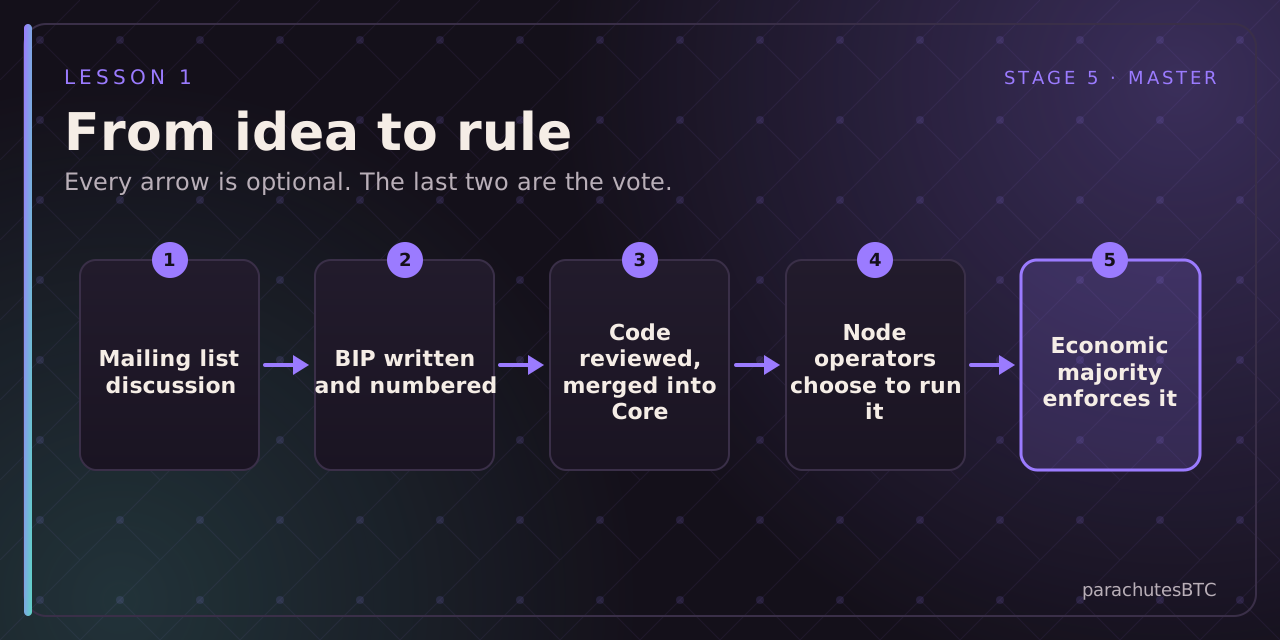
The BIP process
A Bitcoin Improvement Proposal is a numbered document describing a change or a standard: BIP 32 (HD wallets), BIP 39 (seed words), BIP 141 (SegWit), BIP 341 (Taproot). Anyone can write one. It is discussed on the bitcoin-dev mailing list, refined, assigned a number by the BIP editors, and may or may not ever be implemented. A BIP is a proposal, not a decision.
Bitcoin Core
The reference implementation. Code changes arrive as pull requests, reviewed publicly by other contributors, and merged by a handful of maintainers who hold commit access. Maintainers cannot force anyone to run anything; they can only decide what the Core release contains. Alternative implementations (Knots, btcd, libbitcoin) exist and must follow the same consensus rules to stay on the network.
Who decides
Nobody, which is the point, and everybody, which is the mechanism:
- Developers propose and write code. They have influence through quality and reputation, no authority.
- Node operators choose which software to run. A rule that nodes do not enforce is not a rule.
- Miners signal readiness and build blocks under the rules nodes accept.
- The economic majority (exchanges, businesses, holders) decides which chain they value. In a dispute, their choice of what to call "bitcoin" settles it.
Why it is slow
A consensus change needs near-universal adoption to avoid a split, so proposals go through years of review and must be compelling, safe and backward-compatible. Slow is the feature: it is what makes the rules credible.
Funding
Core developers are funded by grants from companies, non-profits and individuals, with no central employer. Several funding bodies exist specifically to keep development independent of any one firm.