
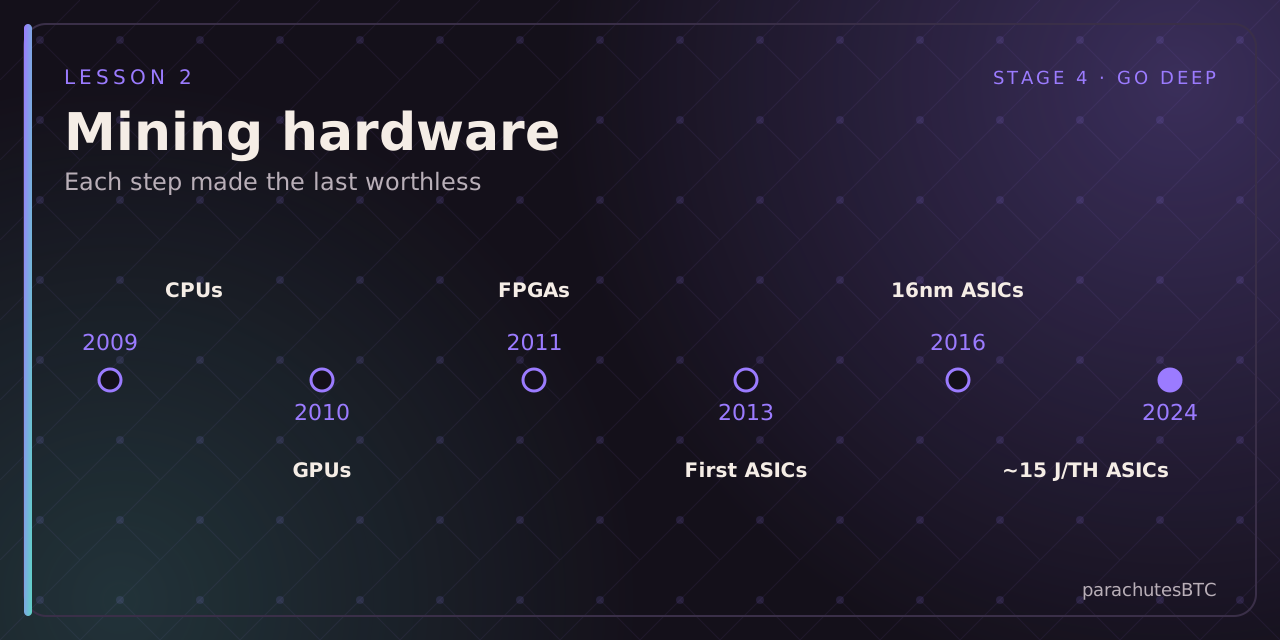
The arms race
Satoshi mined on a CPU. By 2010 graphics cards were dozens of times faster. By 2013 ASICs arrived: chips designed to do nothing but SHA-256, thousands of times more efficient than any general computer. Since then, every generation has made the previous one unprofitable within a few years.
The numbers that matter
- Hash rate per machine, in terahashes per second (TH/s). A modern unit does 200 to 400 TH/s.
- Efficiency, in joules per terahash (J/TH). The best machines are around 15 J/TH; a 2019 machine was 50 or more. Lower is better.
- Price per TH. Hardware cost divided by hash rate.
A machine is viable when its efficiency and your power price together produce more revenue than cost. As the network's average efficiency improves, old machines are squeezed out, which is why used miners trade for scrap in bear markets.
Why ASICs matter for security
Because ASICs do only one thing, there is no idle pool of general computing an attacker could redirect at Bitcoin. Attacking requires building and powering purpose-made hardware, worth nothing if the attack succeeds and the price collapses. The specialisation that critics call wasteful is a security feature.
Manufacturers
A handful of companies (Bitmain, MicroBT, Canaan, newer entrants) make nearly all machines, mostly fabricated at TSMC. Chip supply is a real centralisation concern, though it has eased as more makers have entered.
A 300 TH/s machine at 20 J/TH draws how many watts? (Joules per second is watts; 300 TH/s × 20 J/TH.)