
The instruments
- Futures: agree to buy or sell at a date. CME launched bitcoin futures in December 2017, at the peak.
- Perpetual swaps: futures with no expiry, kept near spot by a funding rate paid between longs and shorts. Most offshore bitcoin trading is perps with leverage up to 100×.
- Options: the right to buy (call) or sell (put) at a price. Deribit is the main venue.
Leverage
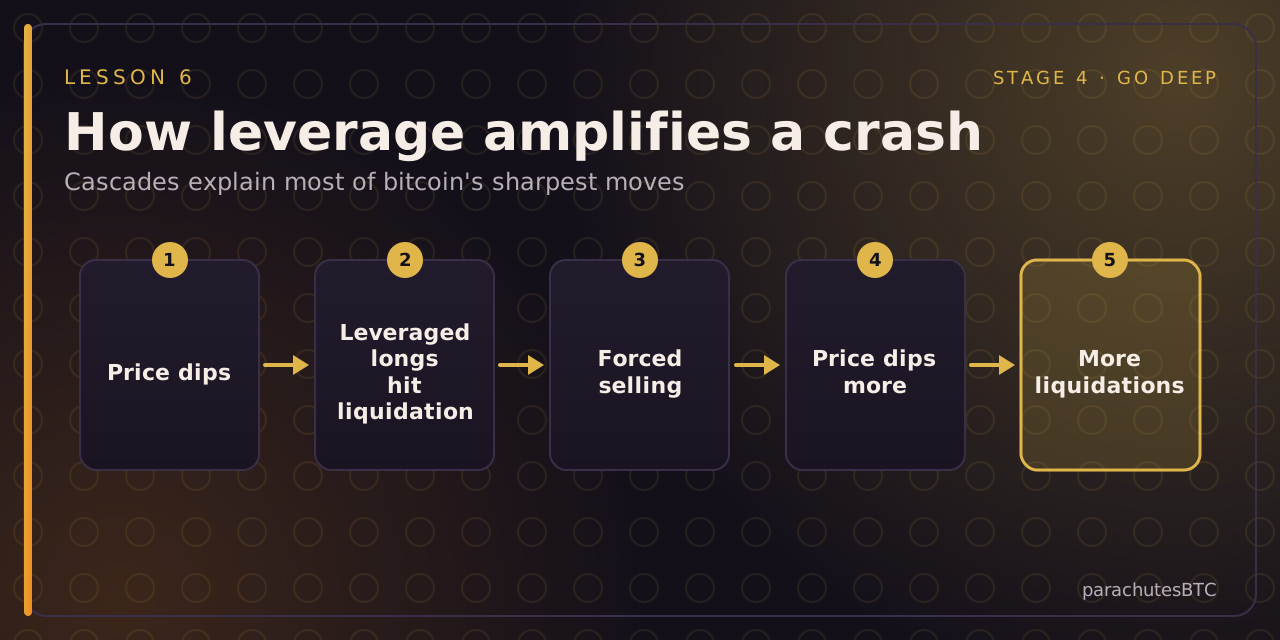
Borrow to hold a bigger position. 10× leverage means a 10% move doubles your money or wipes it out. When the price moves against you past a threshold, the exchange liquidates you: sells your position by force. When many traders are liquidated at once, their forced selling moves the price further, liquidating more. That cascade is behind most of bitcoin's sharpest crashes and squeezes.
Reading the signals
- Funding rate: high positive funding means longs are paying shorts to stay in; the market is crowded long and fragile. The Bitcoin Charts dashboard shows it under Derivatives.
- Open interest: total size of open contracts. High and rising with price means leverage is building.
- Liquidation data: after a cascade, leverage is flushed and the market is cleaner.
The bitcoiner position
Derivatives are useful for miners hedging and for price discovery, and they are how most people lose their bitcoin. The 2022 collapses (Three Arrows, Celsius, FTX) were leverage. Holding spot with no debt cannot be liquidated.
CHECK YOURSELF
pick an answer for each question