
The strongest version
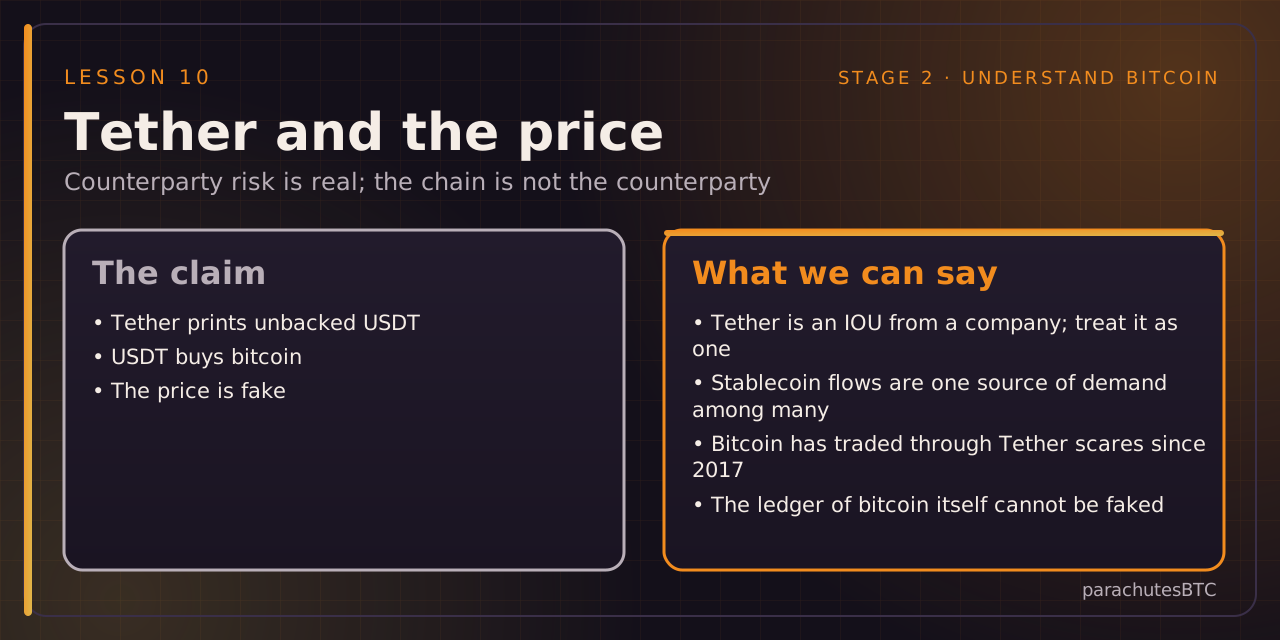
Tether, the largest stablecoin, issues dollars-on-a-blockchain without full audits. Those tokens buy bitcoin. If Tether is not fully backed, the bitcoin price is built on counterfeit dollars. And whales move the market at will.
On Tether
Tether is a company. Its token is a claim on that company's reserves, which have been questioned, fined over, and more recently attested by accountants but not fully audited. Treat USDT as what it is: a dollar IOU with an issuer. If the issuer failed, the people holding its tokens would be hurt, and markets would be disrupted, as they were when other stablecoins failed.
But bitcoin's price is set across many markets, in many currencies, with and without stablecoins. Tether has been "about to collapse" in headlines since 2017; bitcoin has set several all-time highs since. Stablecoins are a convenience for traders, not the foundation of the asset.
On whales
Large holders can move short-term prices in any market, and bitcoin's is still small. That is a reason for caution about short-term trading, not a reason to doubt the asset. Over time, distribution has widened: more coins are held by more entities every cycle, and ETFs and corporations added new large, transparent holders.
What remains true
Stablecoins are a weak point in the plumbing, and regulation is catching up with them. The honest bitcoiner position is simple: a stablecoin is fiat with extra steps, and the asset that cannot be printed is the one on the other side of the trade.