
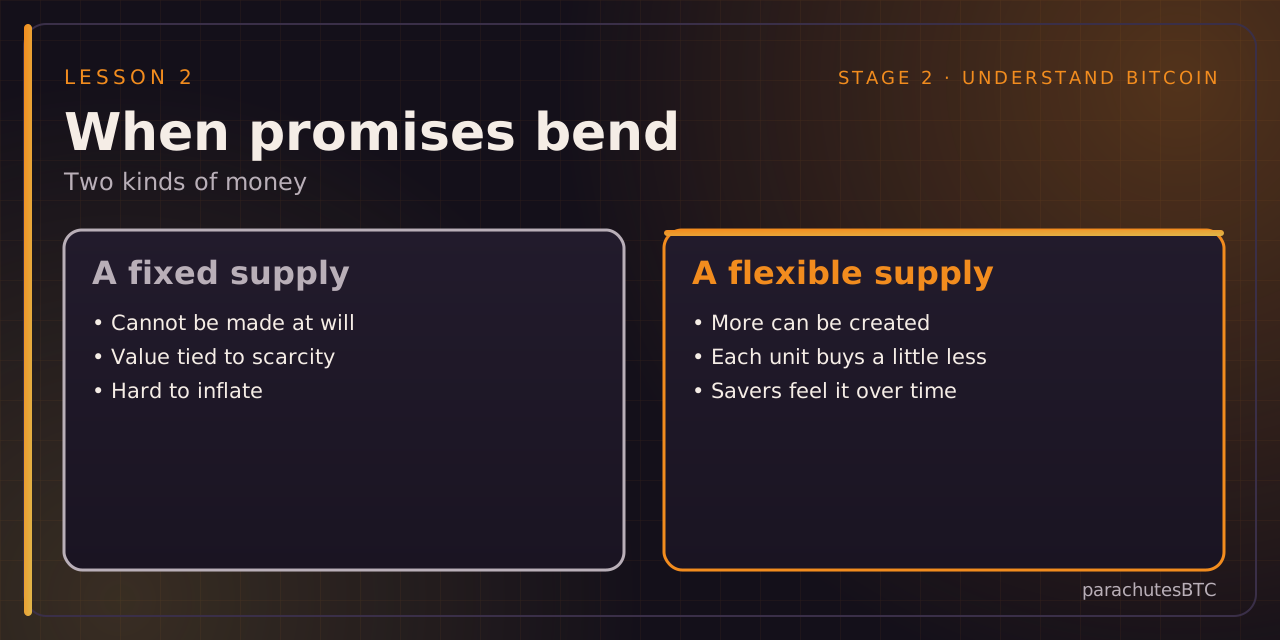
If more money is created, and the amount of goods stays the same, each unit of money tends to buy a little less. That is inflation: a general rise in prices over time.
Modern national currencies, often called fiat money, can be created by central banks and by lending. That flexibility lets governments respond to crises. It also means savings held in that currency can lose purchasing power slowly.
Why this matters for the rest of the course
People who like the idea of Bitcoin often point to this tension. They ask: what if there were a money whose supply was fixed in advance and checkable by anyone?
Others disagree, and point out that flexibility helps economies in emergencies, and that Bitcoin's price is far more volatile than major currencies. Both views are held by thoughtful people.
One thing to remember
Inflation is the slow loss of what a unit of money buys. Bitcoin was designed with a hard supply limit partly as a response. Whether that makes it better money is the question to keep asking as you learn.
For a fuller treatment, see the Money 101 course.