
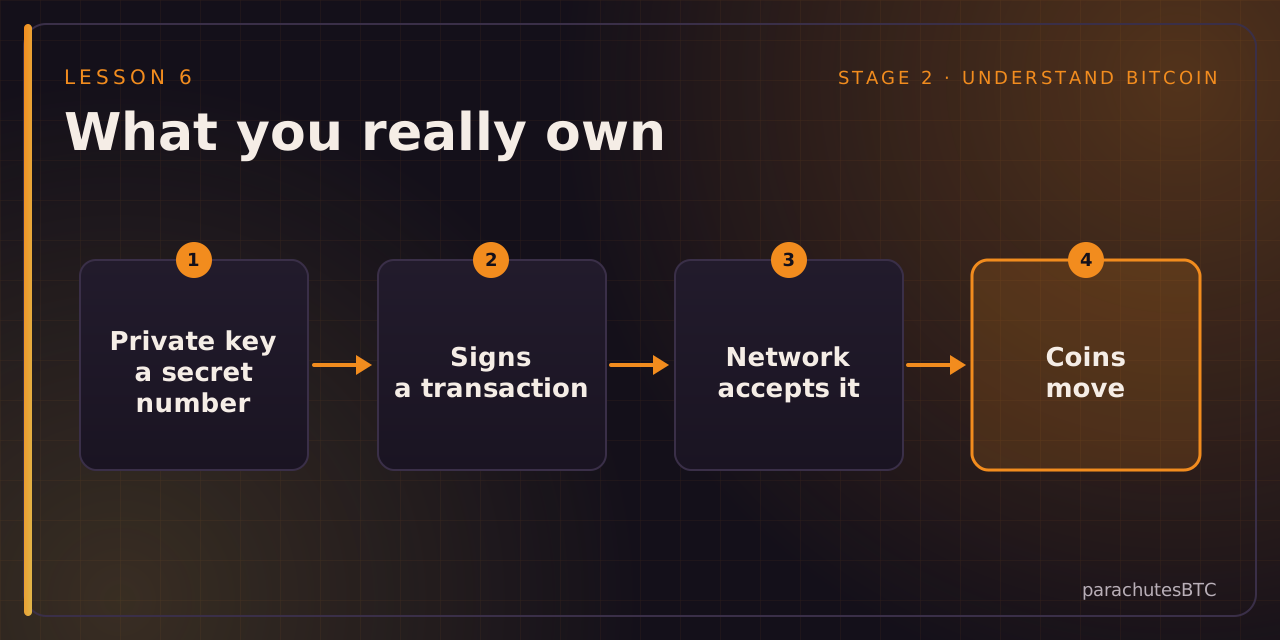
Bitcoin is not stored "in" your phone. The network records which addresses hold which coins. What you actually hold is a private key, a secret that lets you sign transactions that spend from an address.
A wallet is software or hardware that manages your keys. It usually gives you a seed phrase, 12 or 24 words that can recreate your keys if the device is lost.
Two ways to hold
- Self-custody: you hold the keys. No one can freeze or lose your coins on your behalf, and no one can recover them for you either.
- Custodial: a company holds the keys and you hold a claim on them, like a bank account. Easier to use, but you rely on the company.
One thing to remember
"Not your keys, not your coins" is a short way of saying the same thing: control belongs to whoever holds the key. The self-custody course covers the practical steps.
Tap a card to flip it.
CHECK YOURSELF
pick an answer for each question